Experience Design / Branded Environments
Trained as an architect, practiced across every medium — from surgical suites to sports arenas, from customer experience centers to the interactions that surround them. The work is always the same: making complex ideas feel more human, memorable, and in sync with the brand.
My background in architecture taught me to use space as a medium, the same way typography or code is a medium. It shapes how people feel, move, and make decisions. Every room I've designed starts with the same question: what should someone understand about this brand that they couldn't understand from a website?
That lens has carried through 30 years of work in healthcare innovation, brand experience, and design strategy at the firms that helped define these disciplines, and at the companies that hired them.
Spatial Design · Environmental Brand
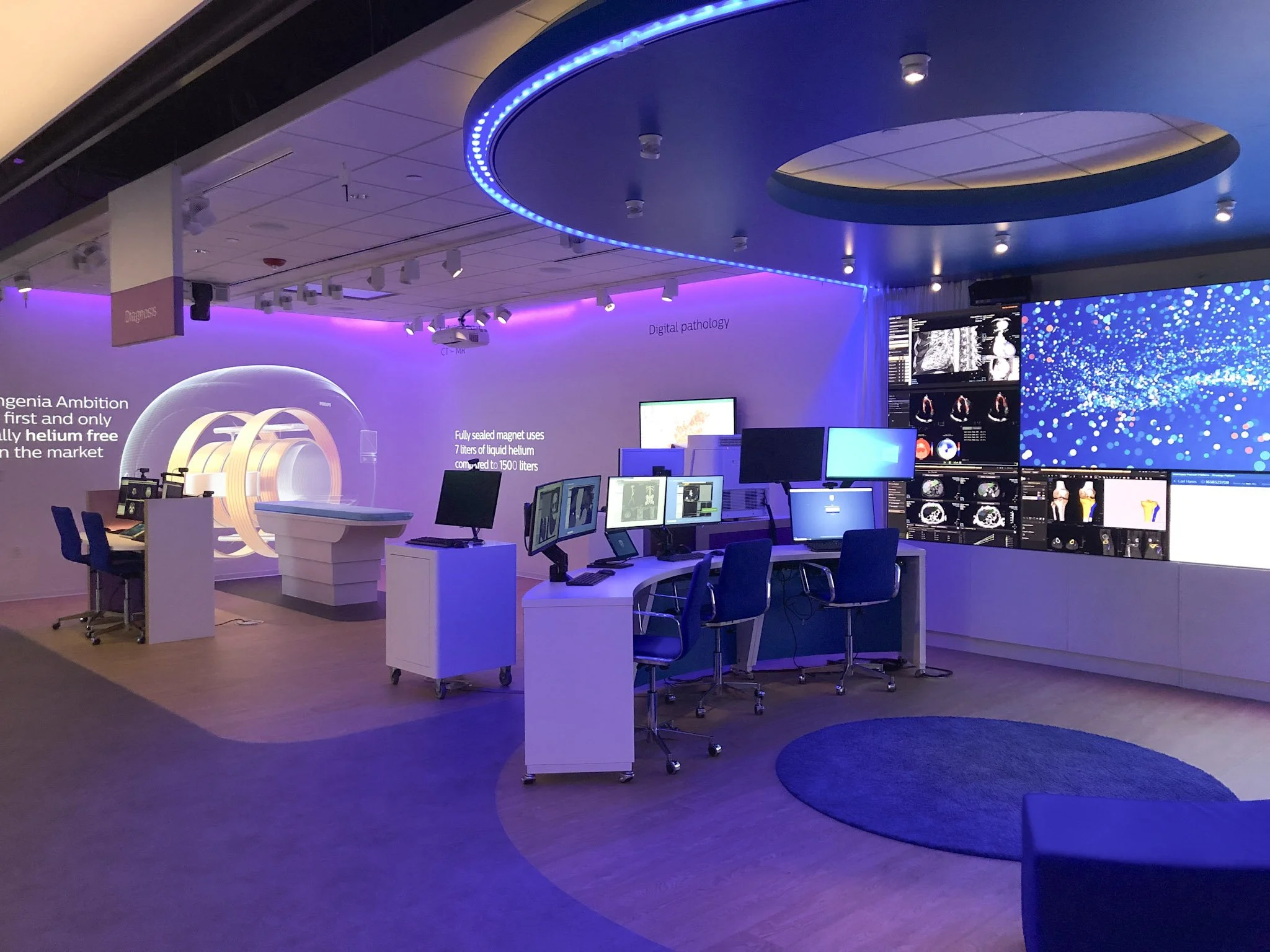
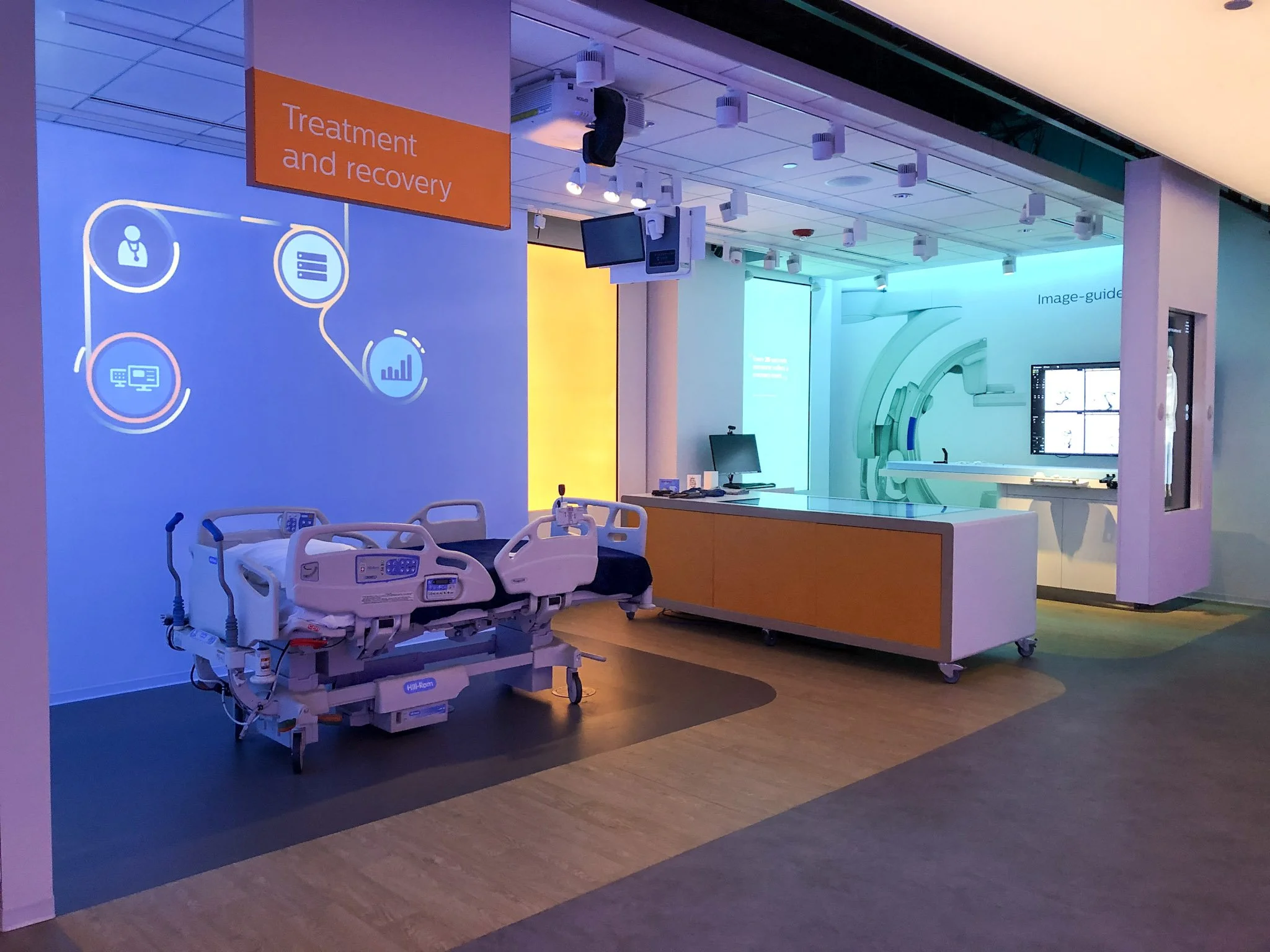
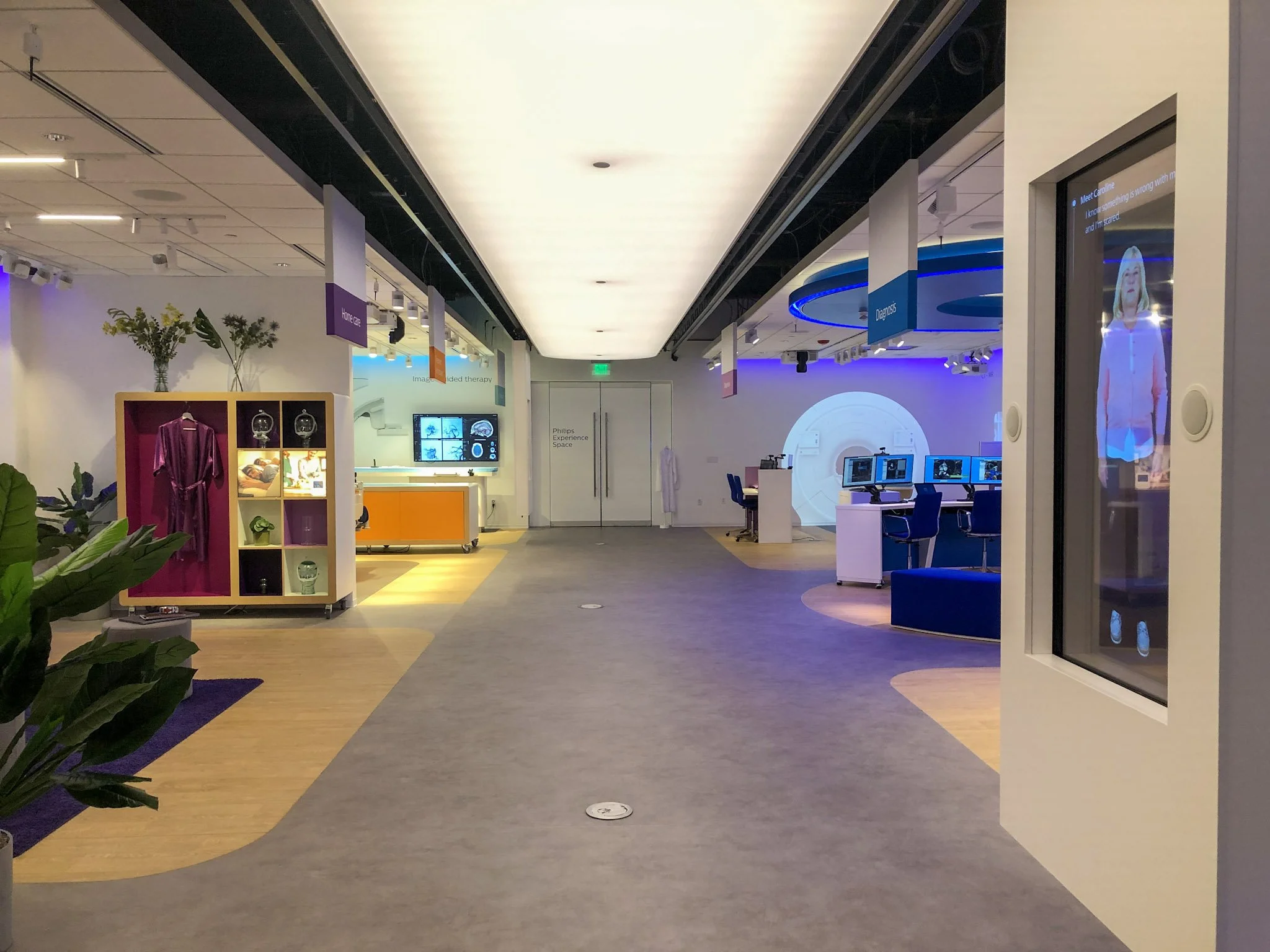
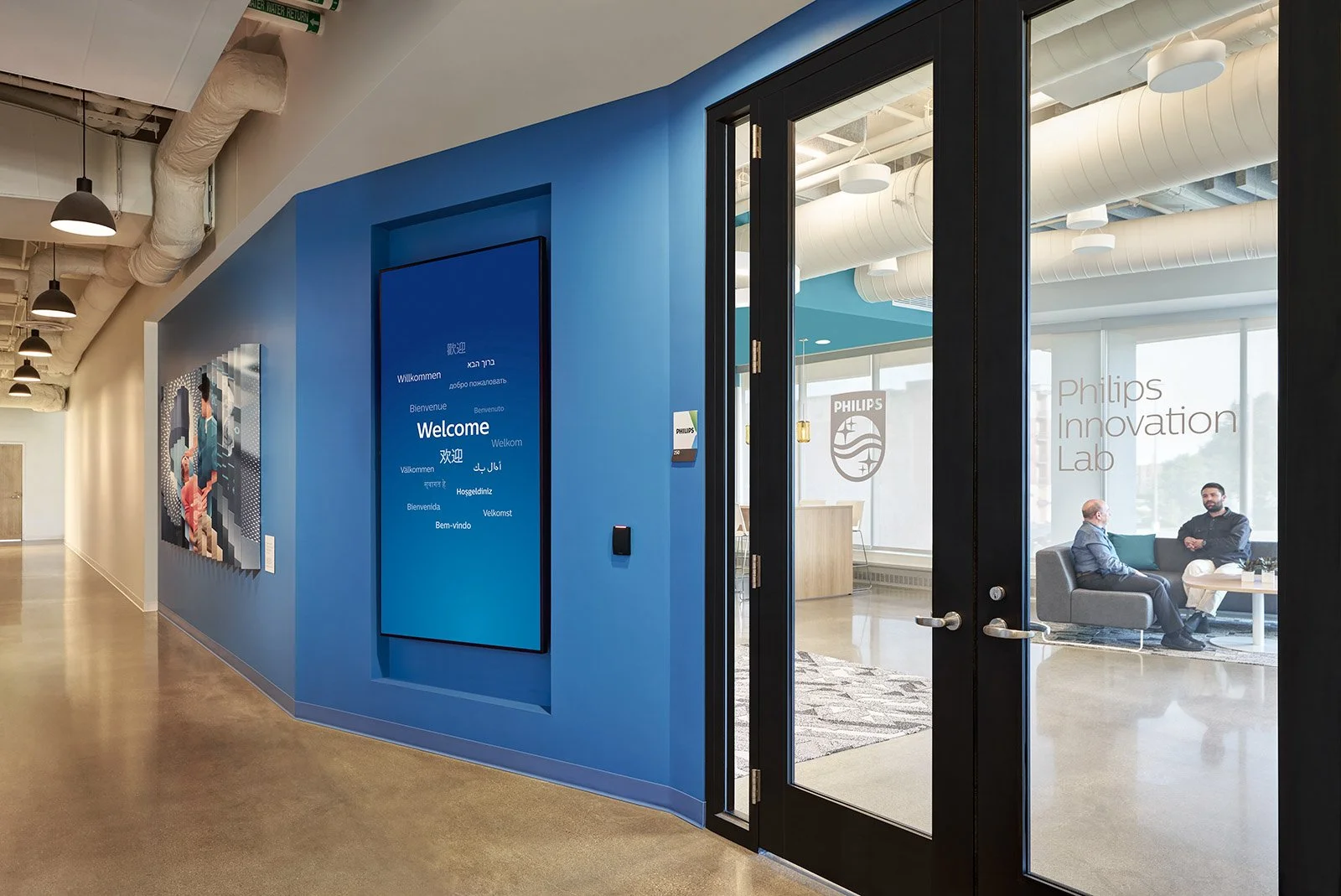
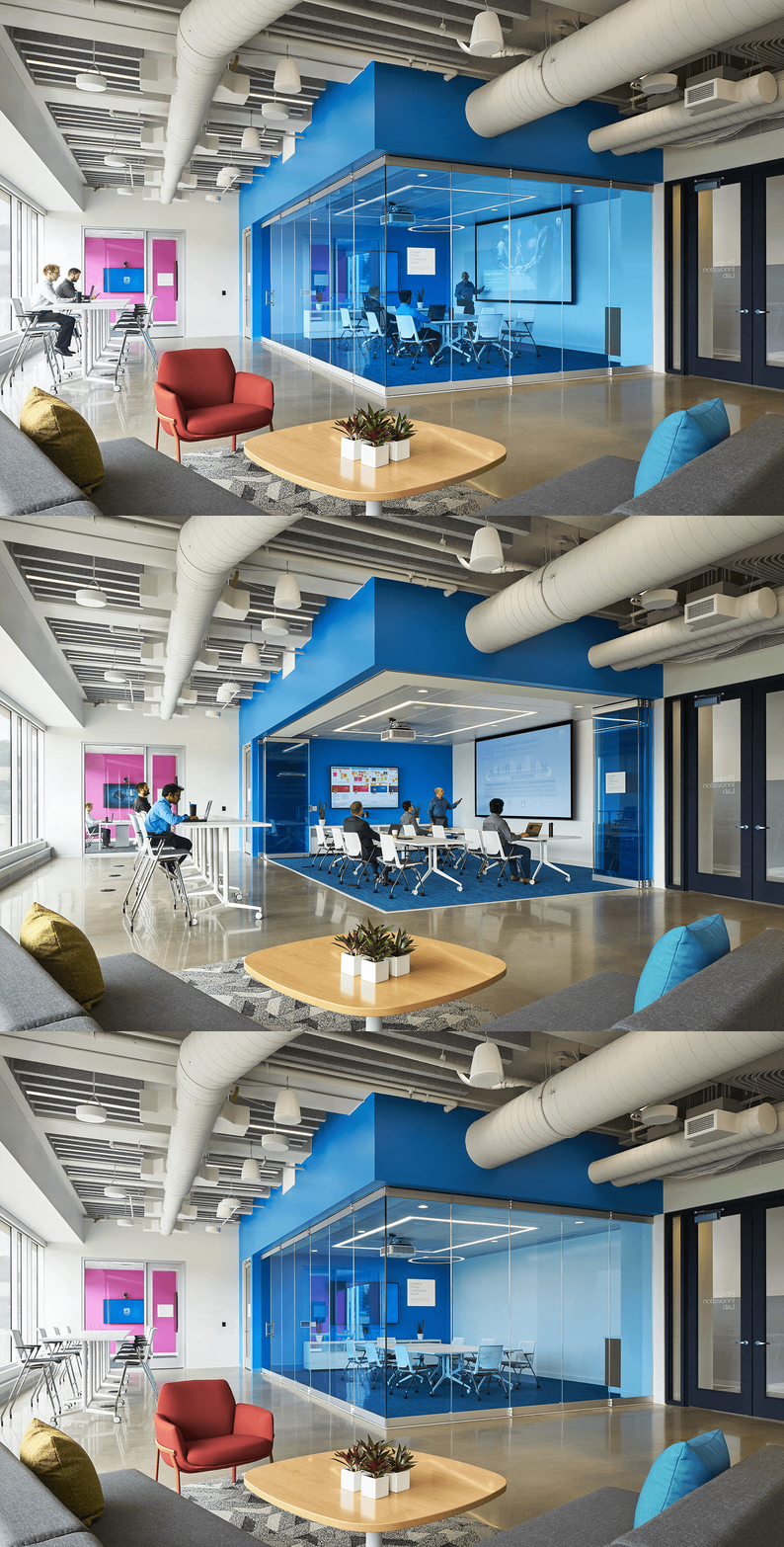
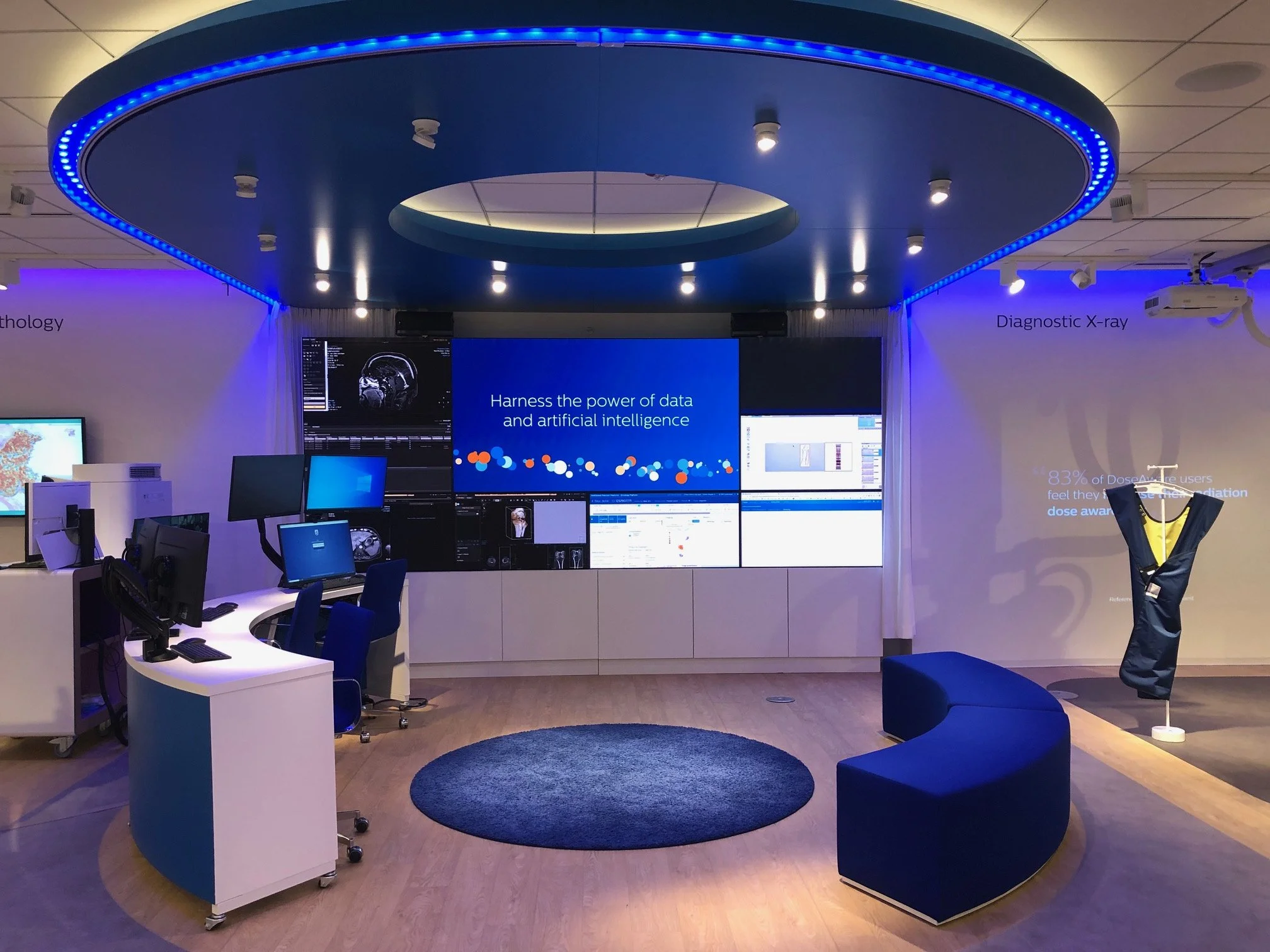
Across eight years at Philips, I led creative direction and programming strategy for a global portfolio of customer-facing environments designed to do double duty: demonstrate Philips' technology and vision to enterprise healthcare customers, while functioning as working environments for the teams who call them home.
This included the North American headquarters build-out in 2019, a major retrofit of the global Customer Experience Center in the Netherlands, and Innovation Hubs in Bangalore and Cambridge. Each space translated Philips' brand palette and design principles into architecture, using color, materiality, and spatial sequence to carry the story from the lobby through the lab.
Healthcare Innovation · Spatial Design
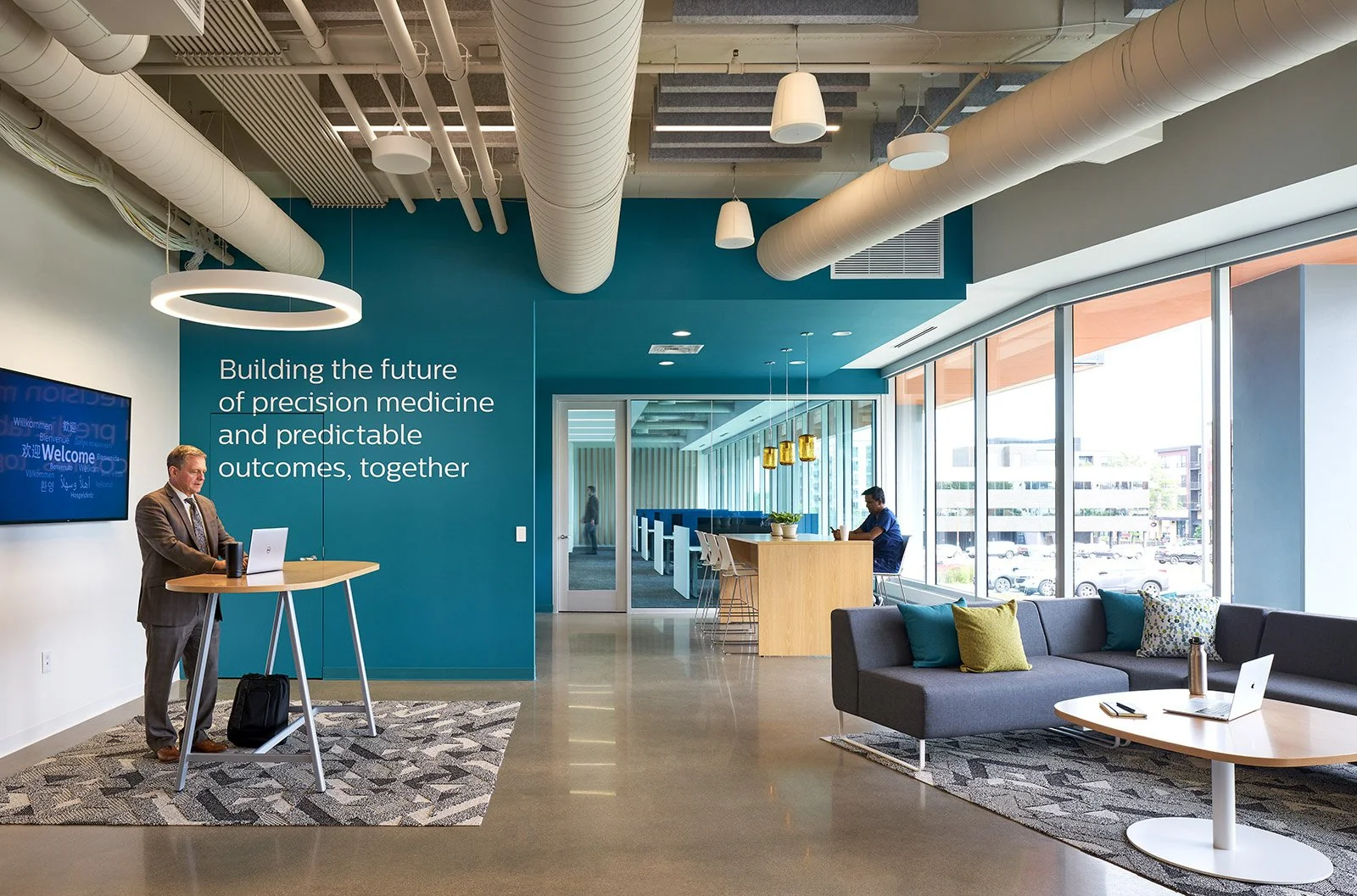
Discovery Square is a world-class med-tech innovation hub on the Mayo Clinic campus and an important brand touchpoint for Philips. I led the programming and schematic design of the ~5,000 sf space: a first-of-kind venue that needed to function simultaneously as a customer-facing showcase for Philips' healthcare innovation capabilities and a working environment for resident research fellows.
The design reflected a then-recent evolution of the Philips brand palette and introduced flexible spatial configurations that could shift from intimate team workspace to immersive client experience in minutes.
Brand narrative concept
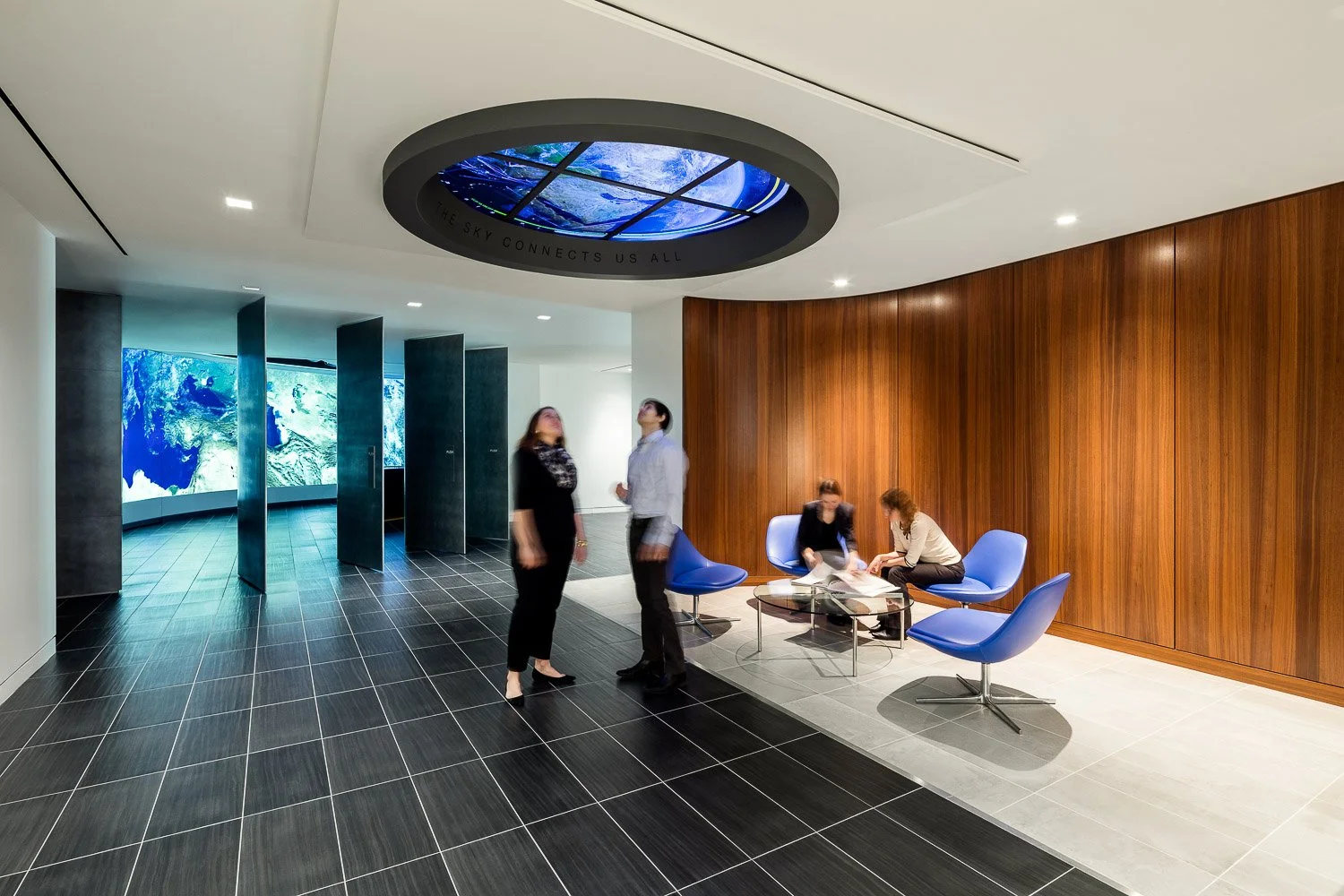
“The sky connects us all.”
If you want to understand Airbus, look up. The dream of flight echoes through human history — Icarus, da Vinci, the Montgolfiers, the Wrights. Today, we fly not merely because we can, but because we must. Our connection to the skies has become essential to how we exist as people: how we connect with the world, with economies and cultures, with those we love. The sky is boundless, and the boundaries to be pushed equally so.
Spatial Design · Environmental Brand · Digital Content
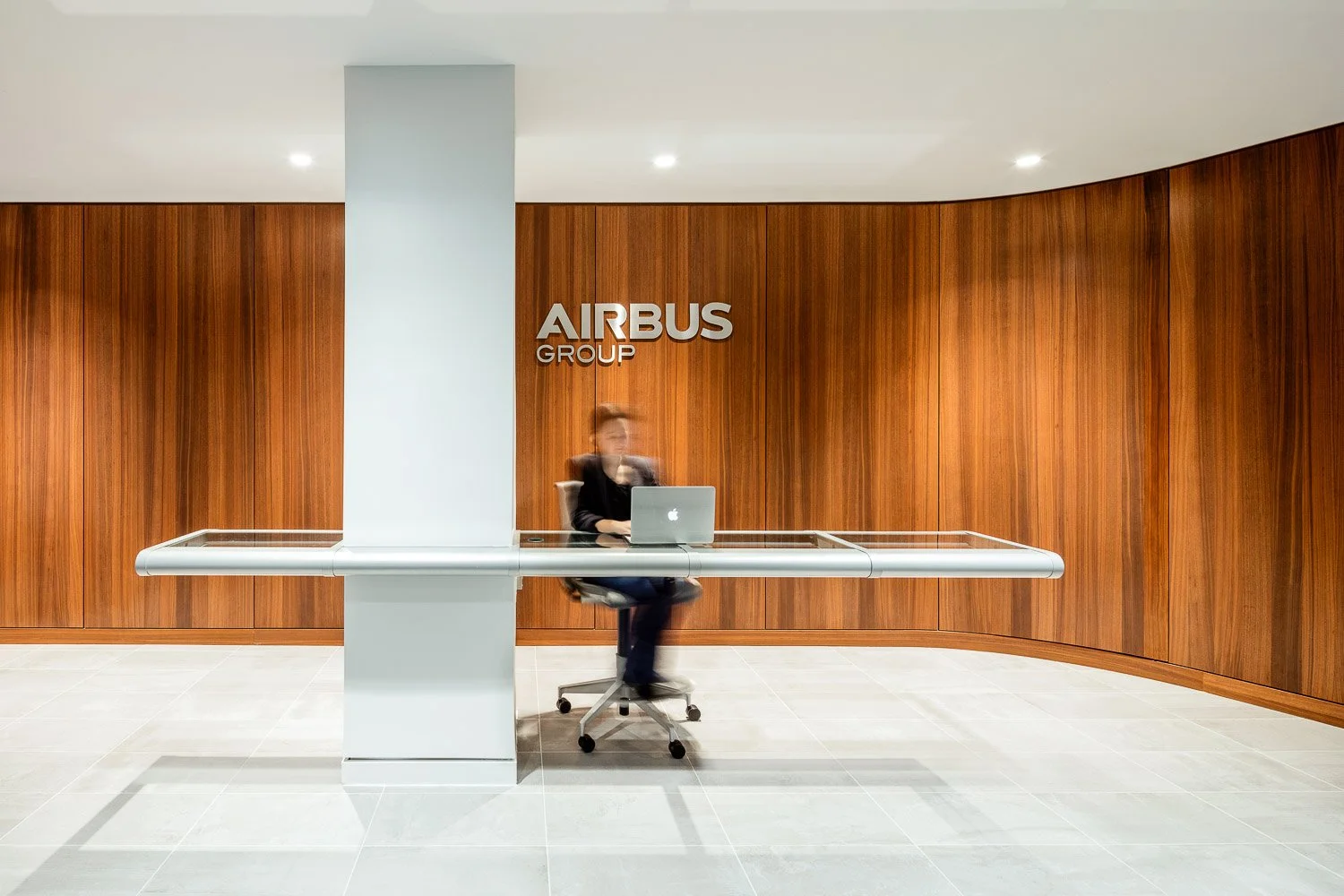
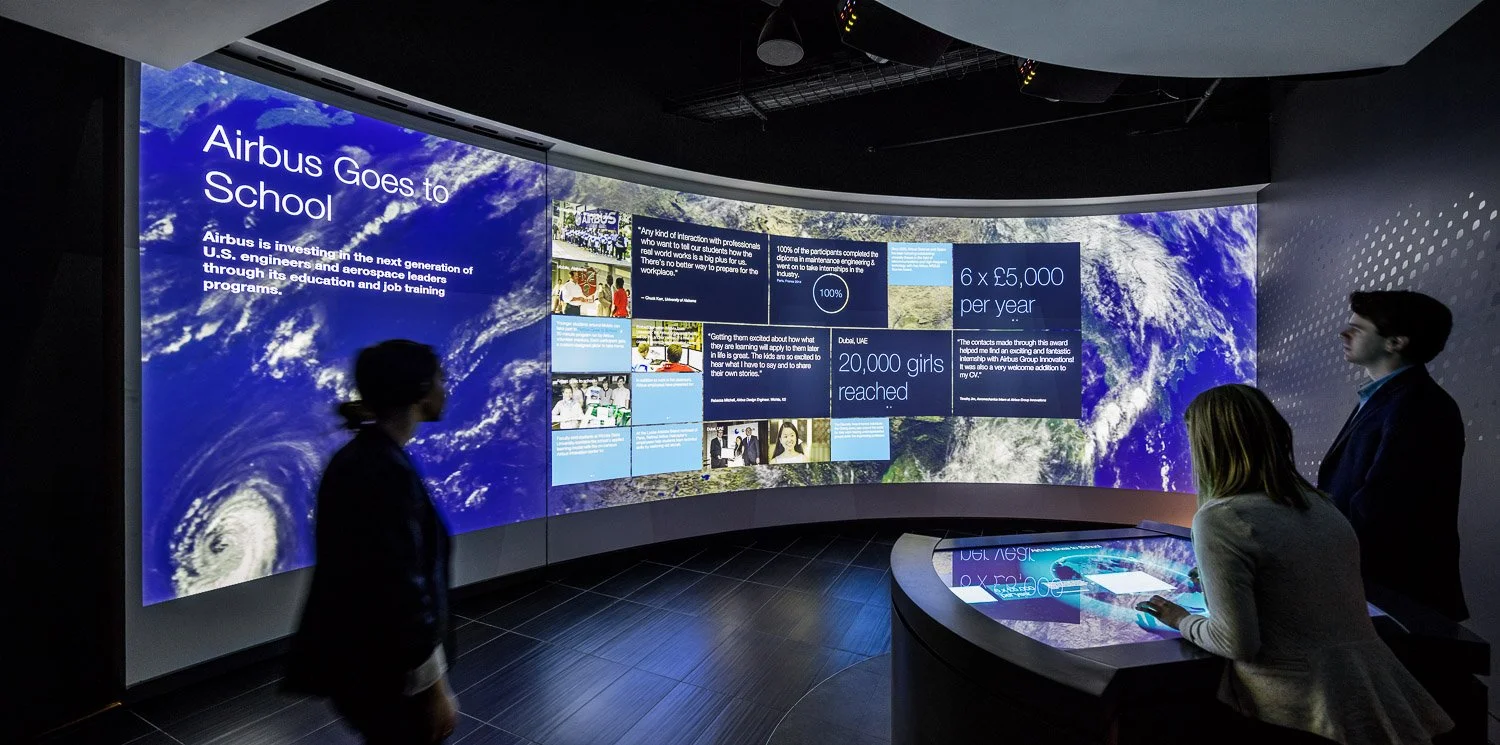
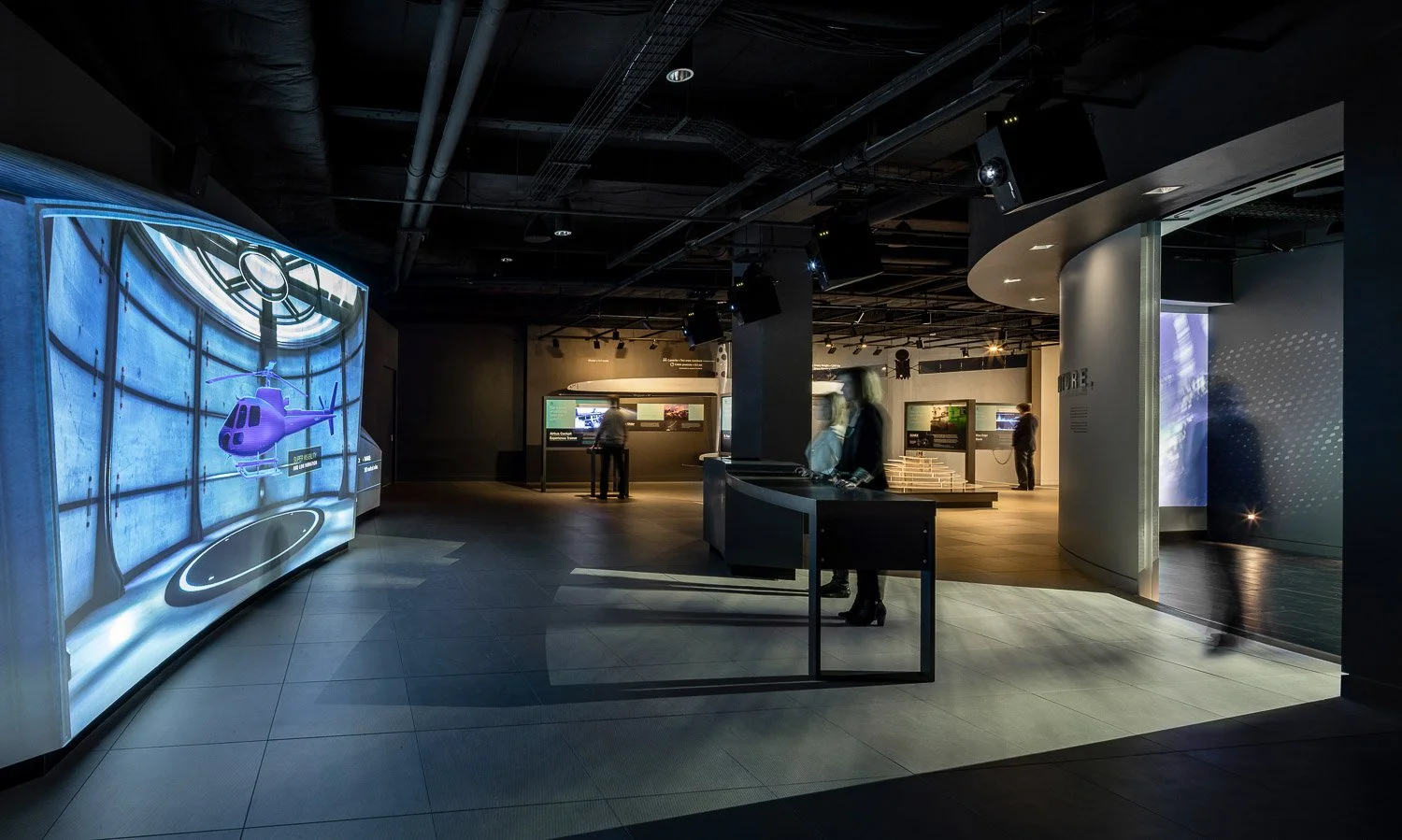
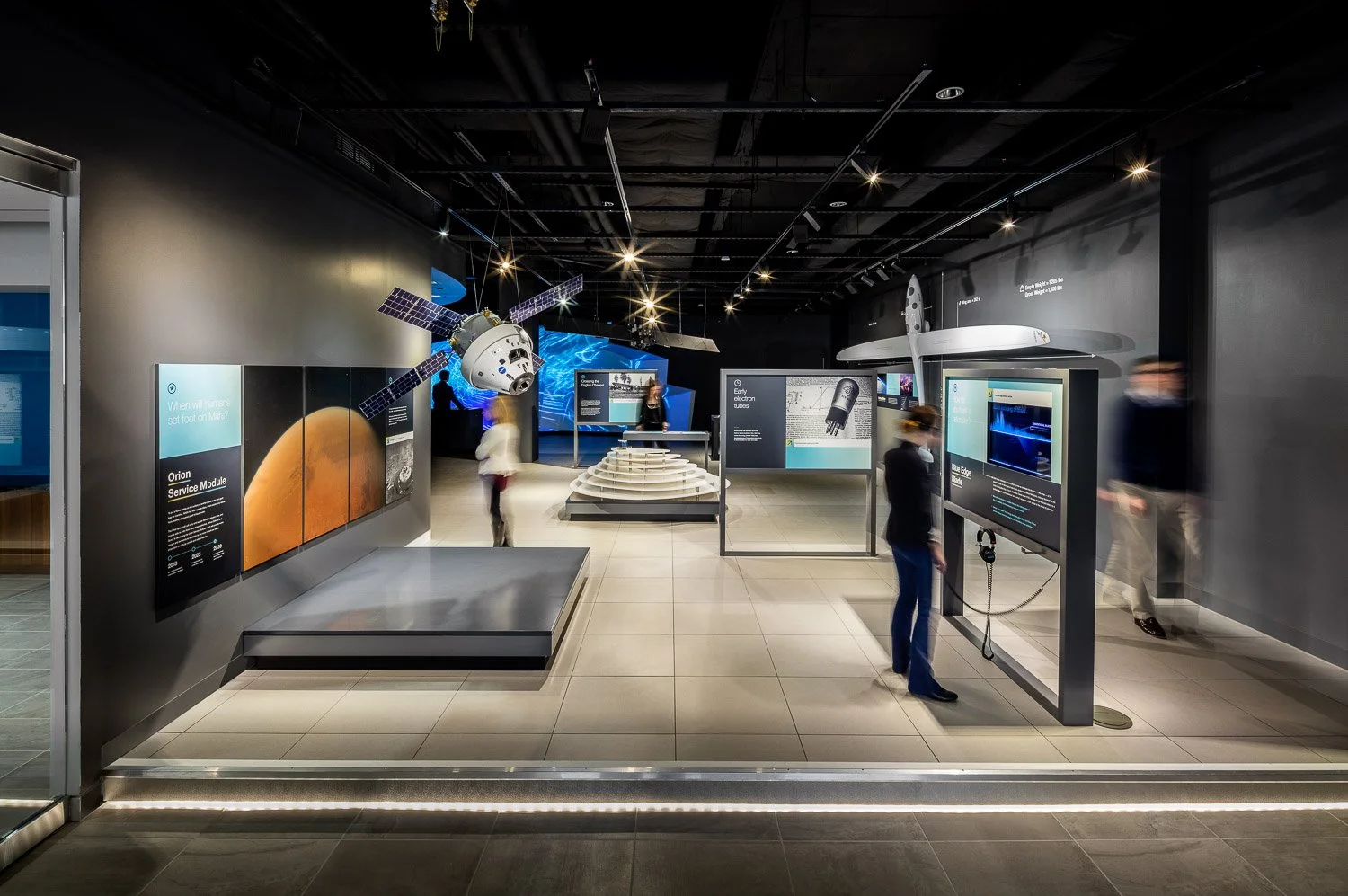
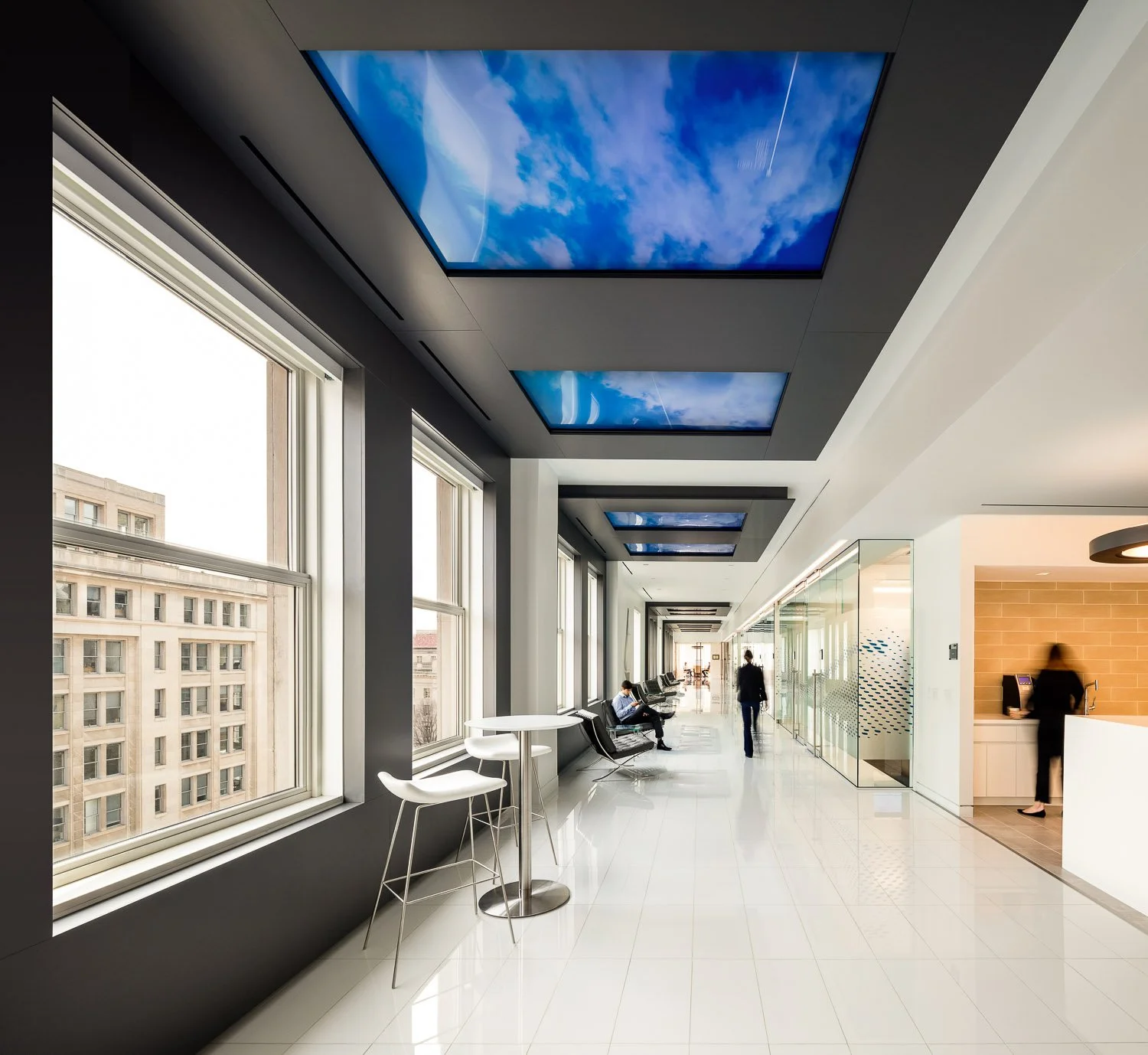
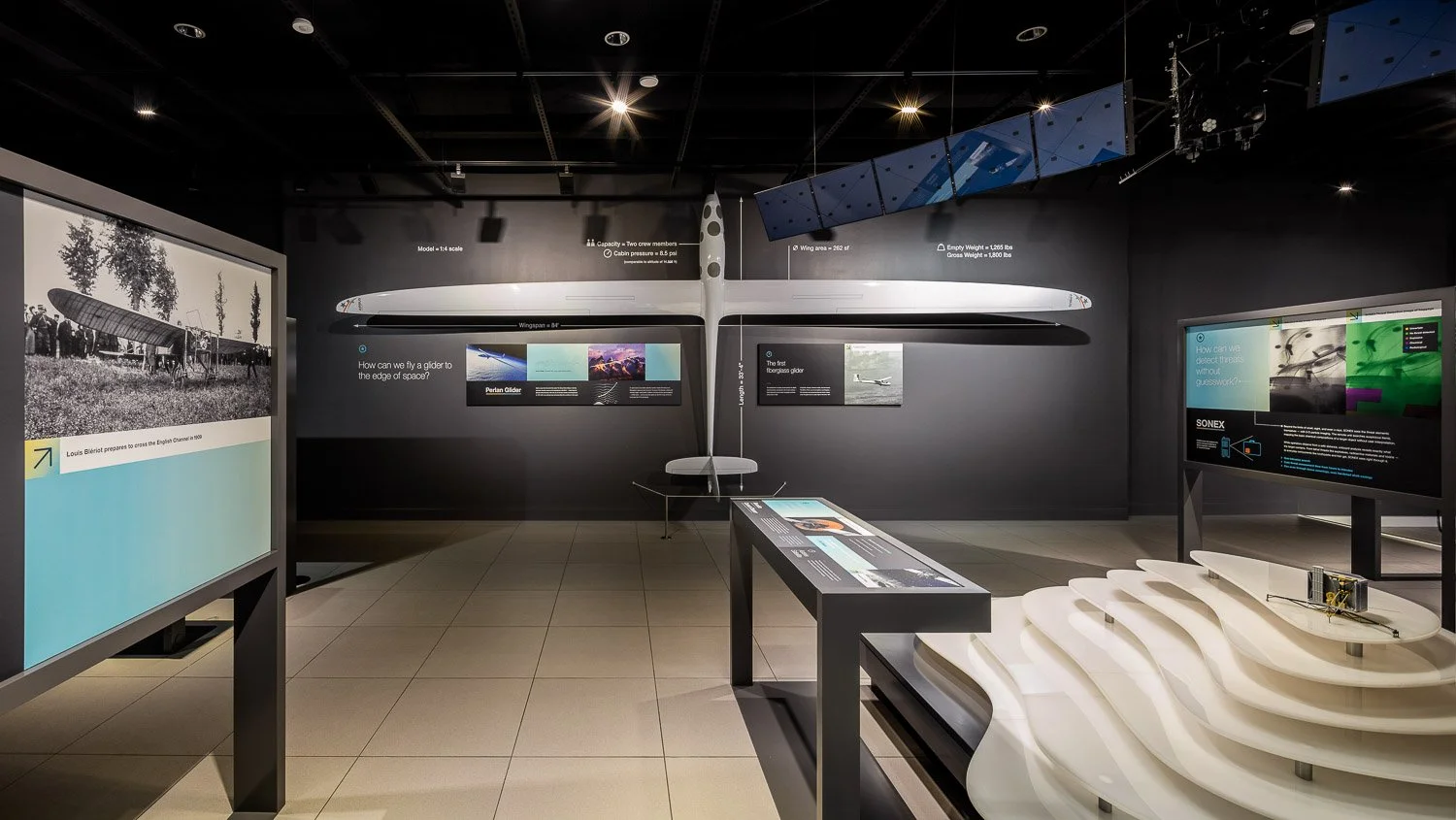
Airbus was entering the US market and needed a physical presence that would announce the brand to government, commercial, and industry audiences with the credibility a European aerospace giant demands. The result was an 8,000 sf flagship Customer Experience Center in Washington DC — a showcase-plus-workspace that invites guests into a greater understanding of Airbus Group's role in shaping the future of aerospace.
I led the project from initial pitch through content development and final implementation including spatial concepts, 3D design, prototyping, executive presentations, and on-site delivery. The space combines custom digital content, interactive exhibits, and flexible collaborative event spaces into a single experience that shifts from intimate executive briefing to large-scale industry reception, carrying the Airbus story without ever having to say it out loud.
Brand narrative concept
“Greatness in Common.”
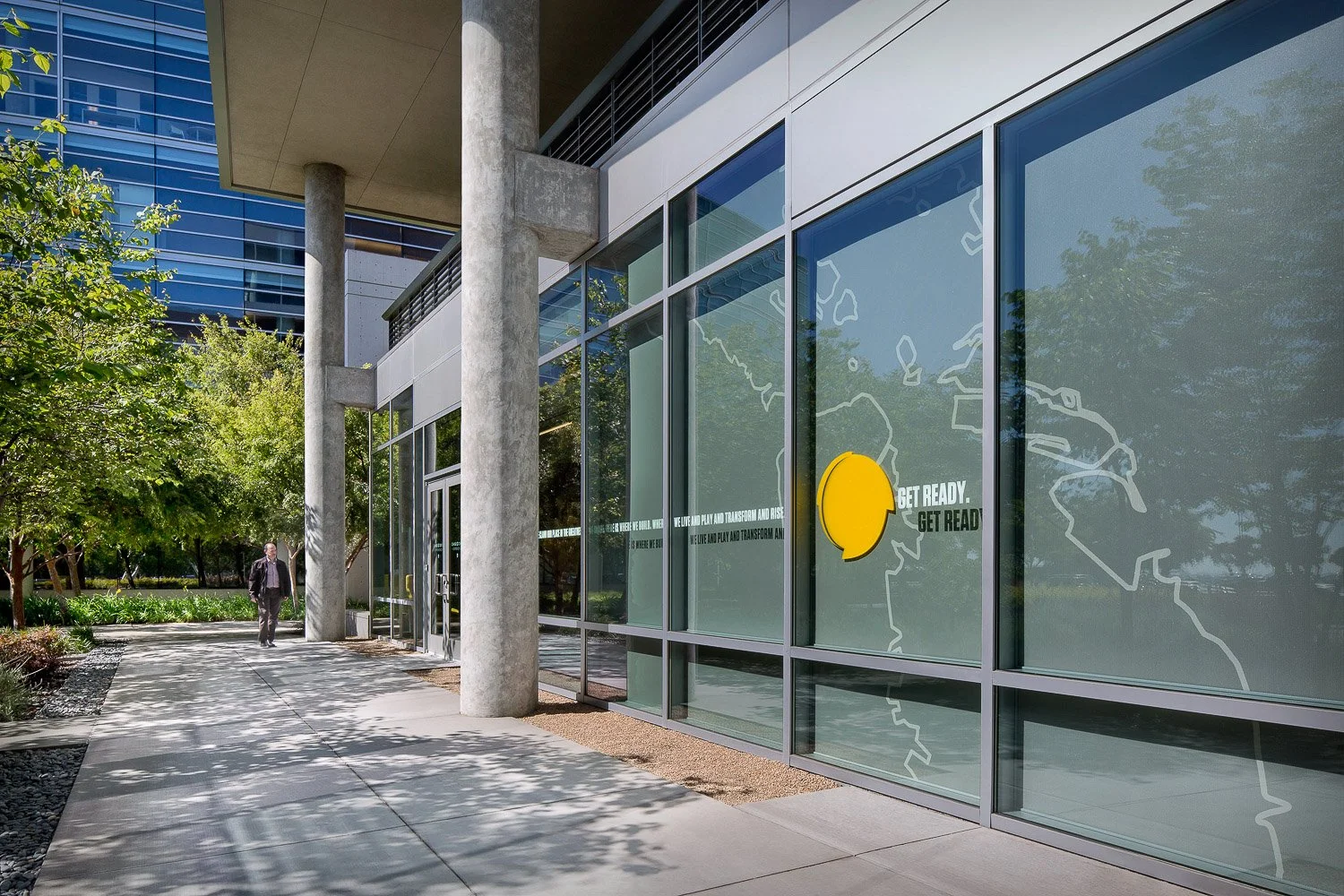
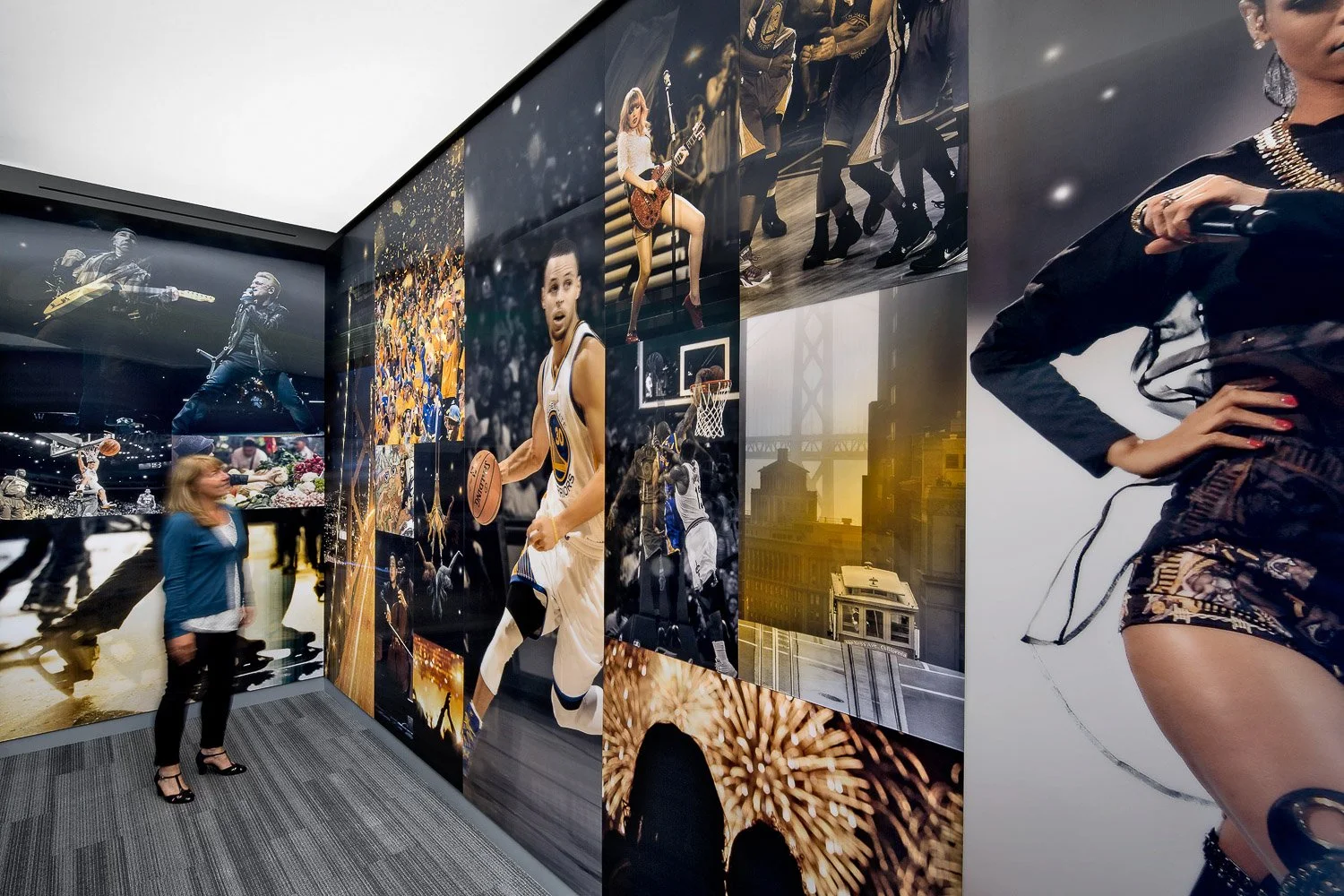
Moving a beloved franchise from Oakland to San Francisco meant navigating real tension: die-hard fans, changing neighborhoods, and the weight of a team on the cusp of dynasty. The concept rooted the new arena in the broader Bay Area community: a shared identity built around the idea that greatness isn't owned by a city, it belongs to a region.
Sales Center · Brand Experience · Immersive Environment
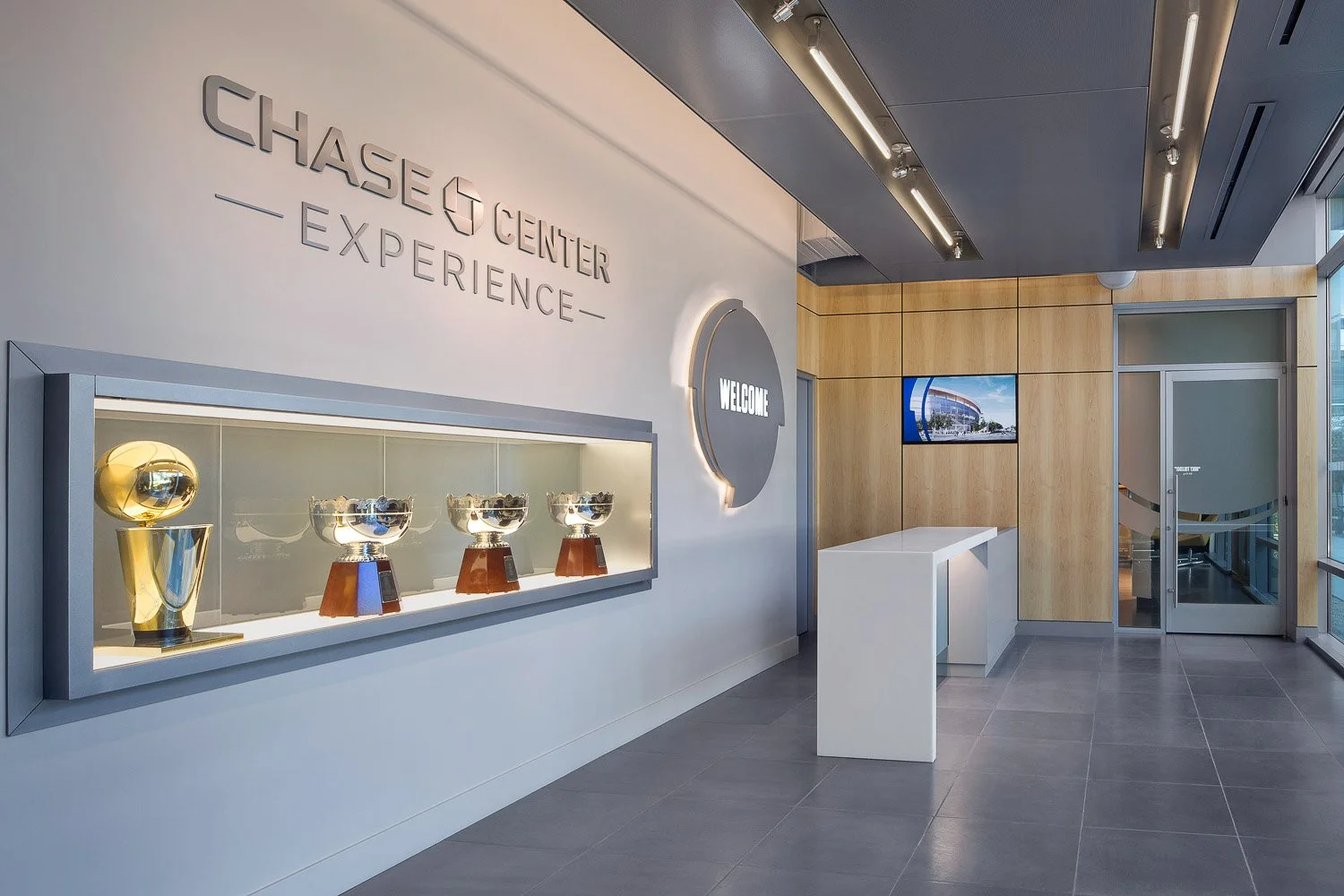
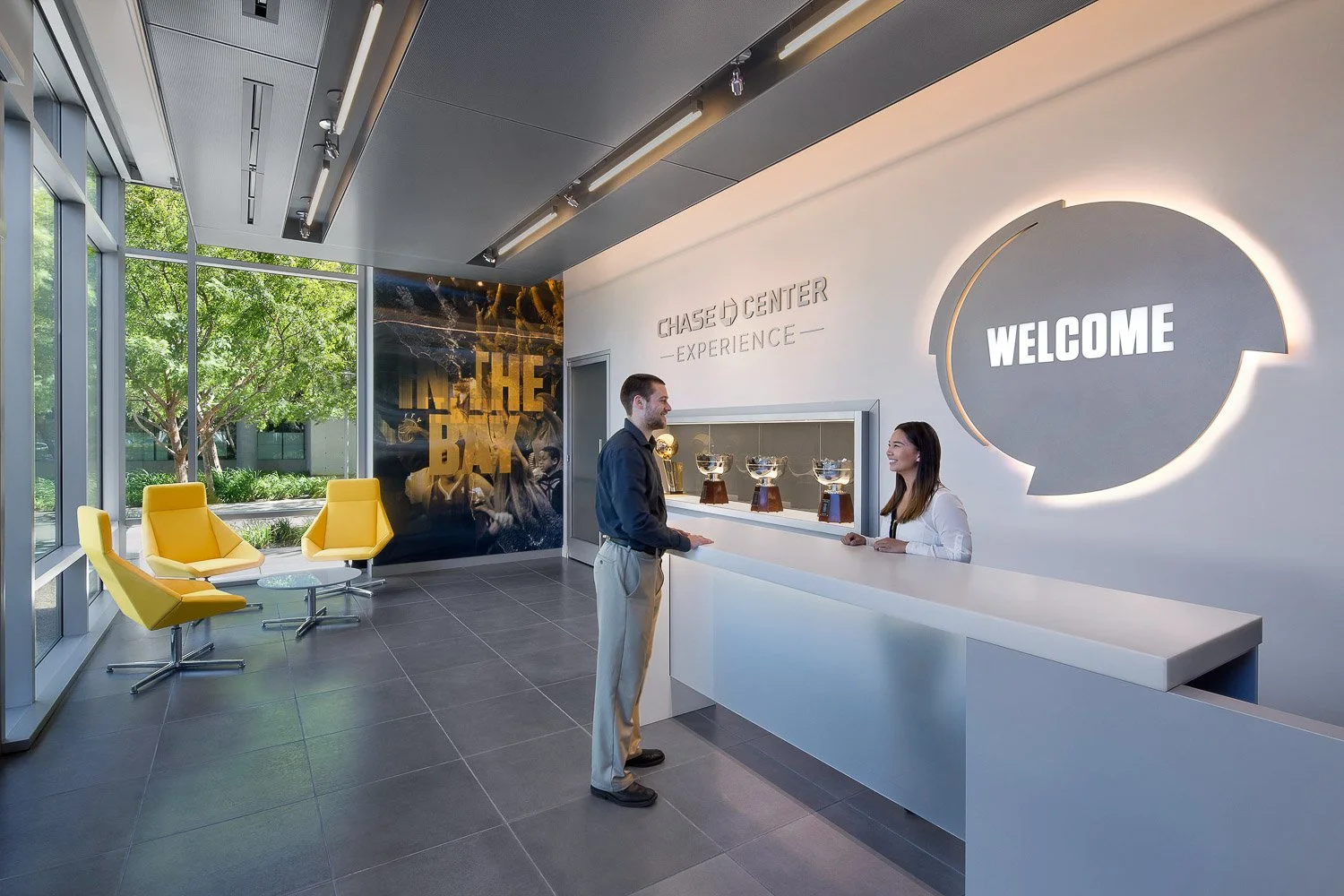
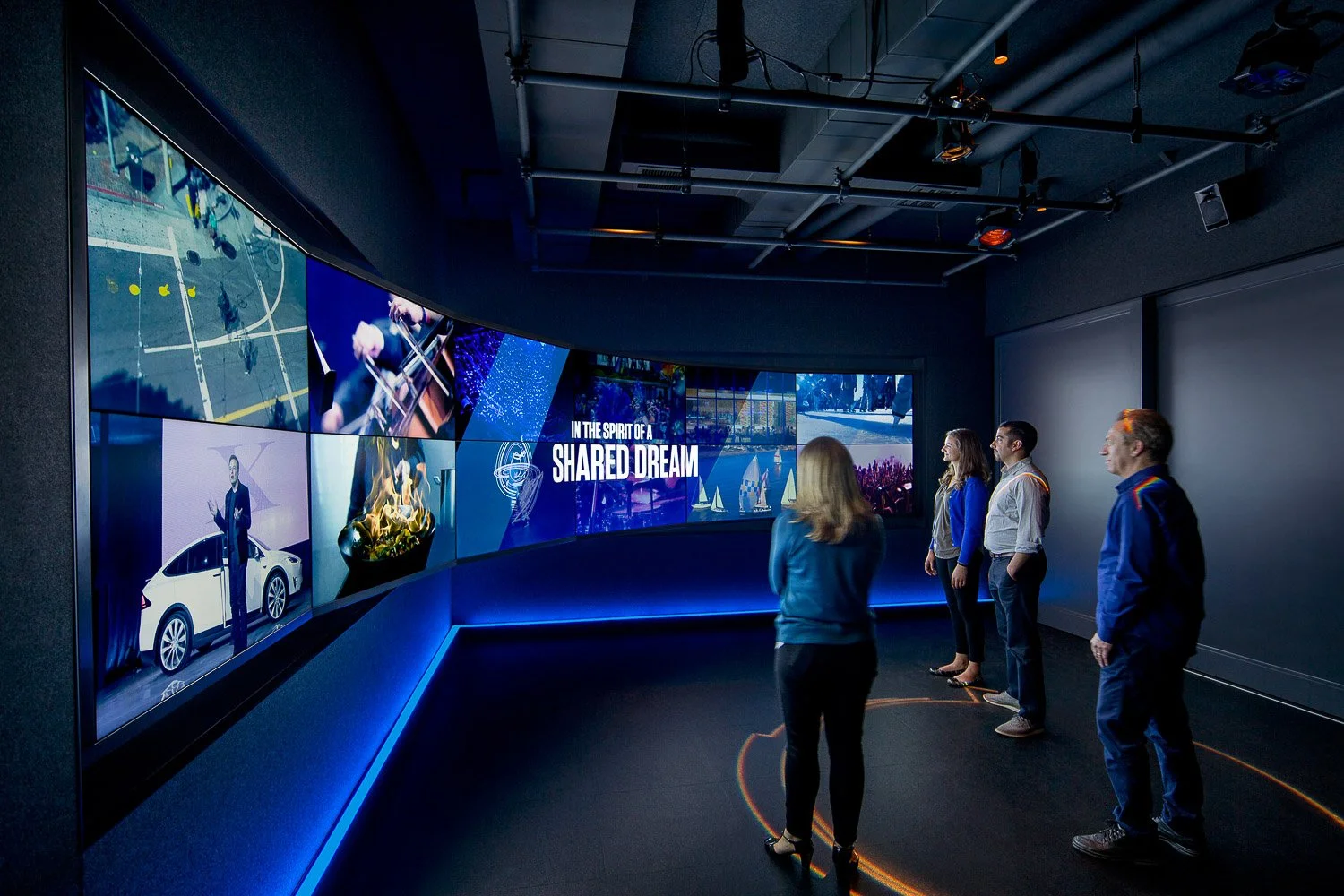
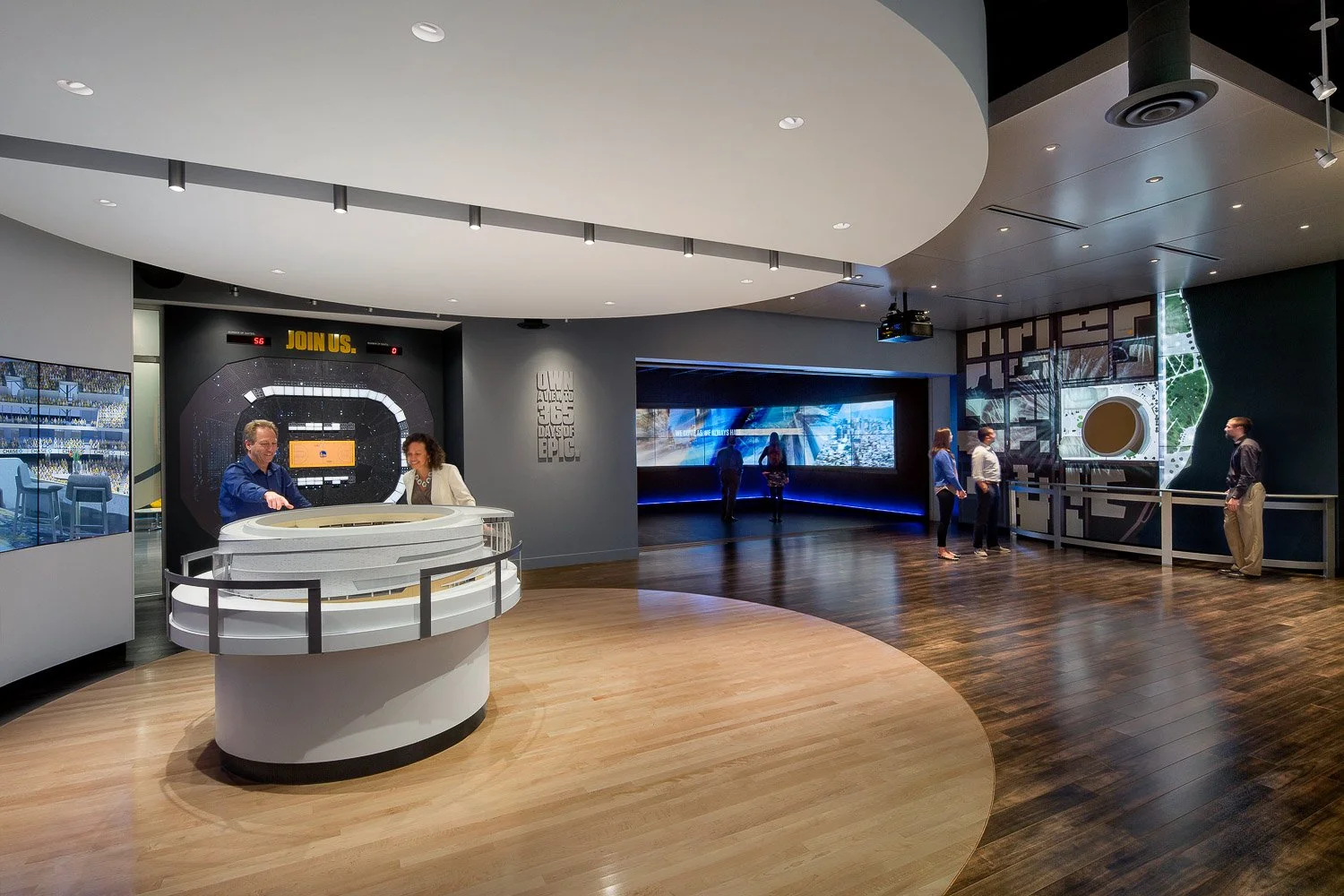
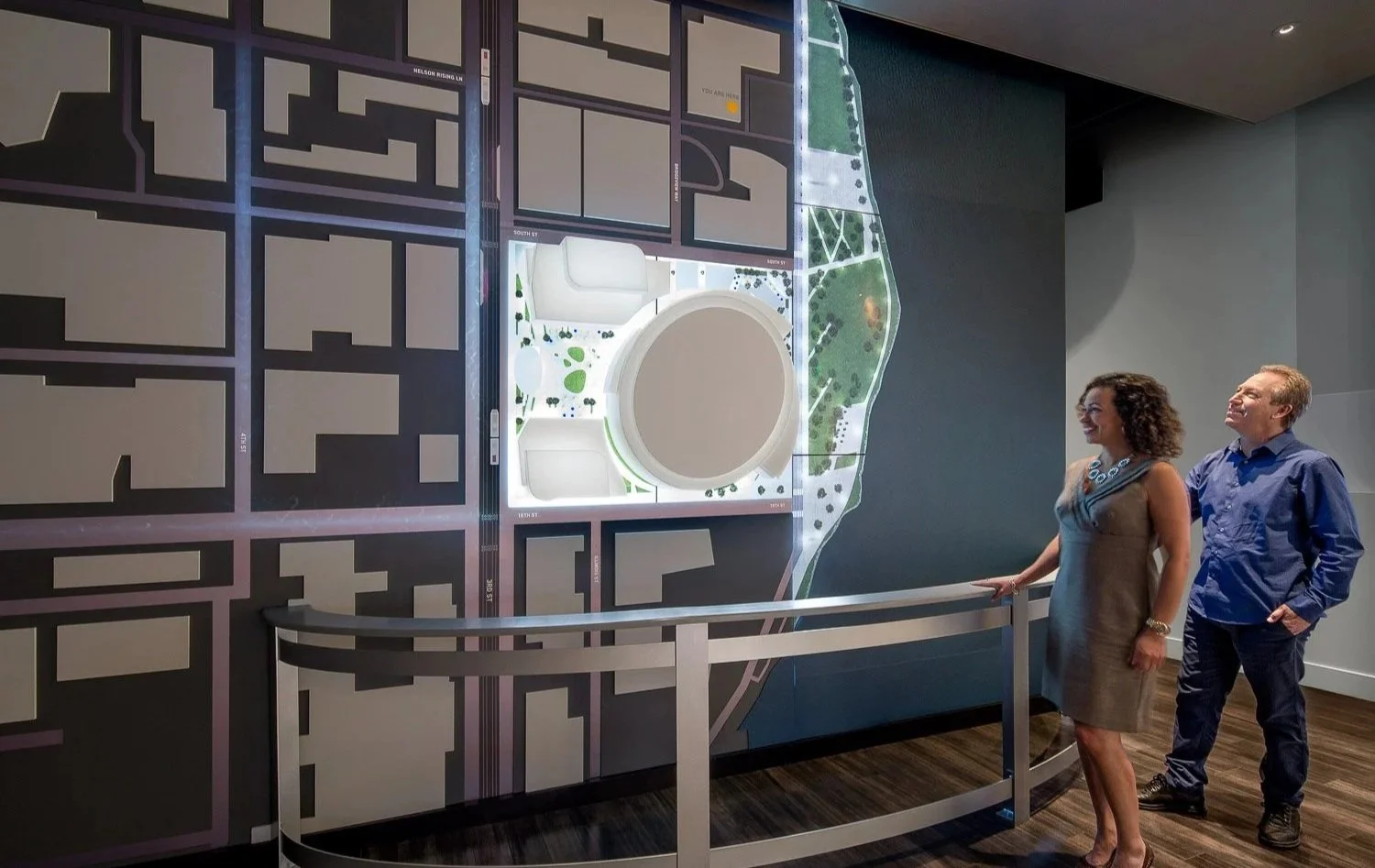
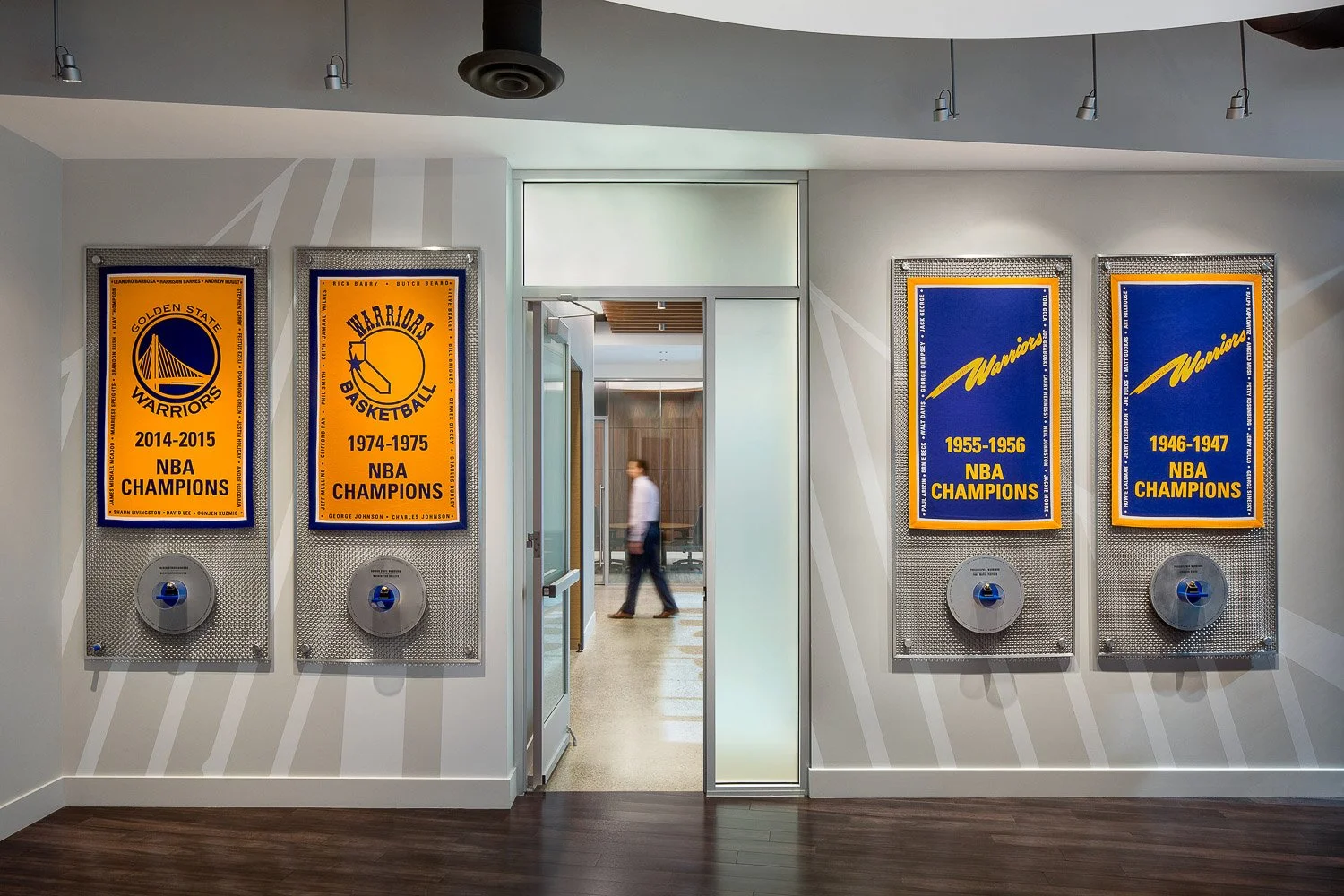
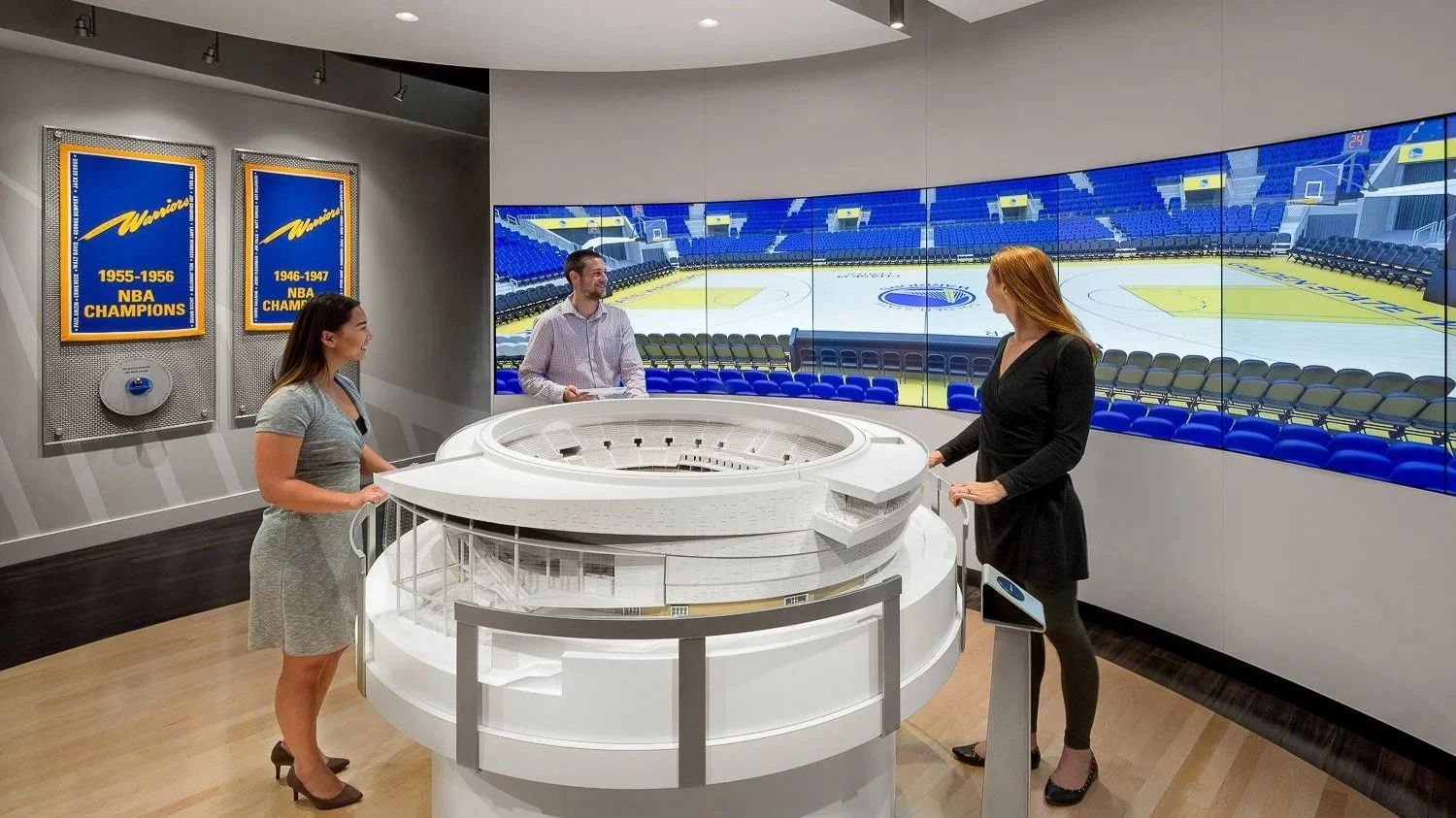
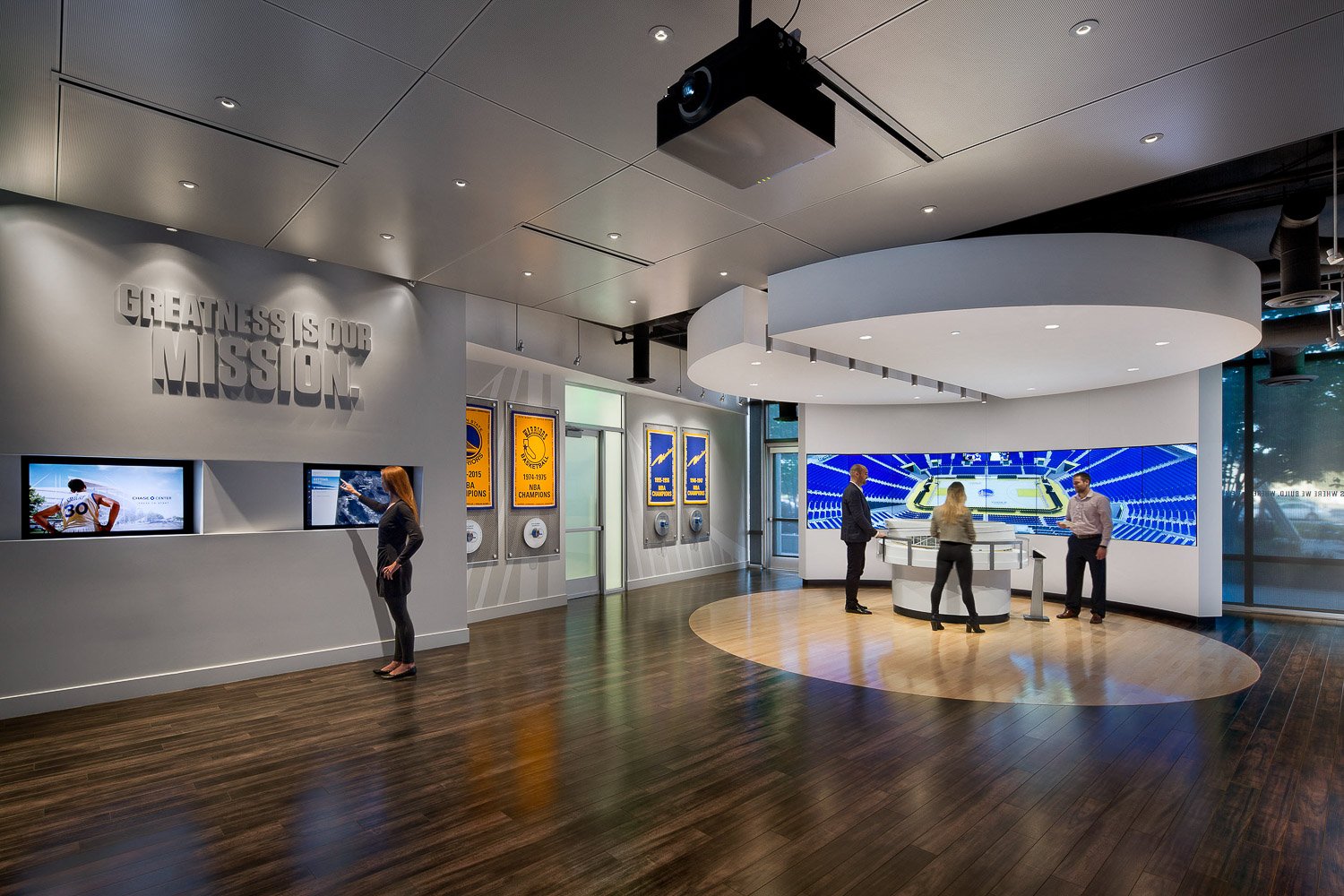
The NBA's Golden State Warriors were building the first privately funded arena in league history, which meant raising over $1.4 billion through sponsorships and suite and seat sales before a single game was played. The sales center experience was the mechanism: an immersive, choreographed environment designed to make the future arena feel not just real, but inevitable.
I led the creative strategy and design development of the entire experience: space design, original digital content and media production, and the overall brand look and feel. The space moved visitors through a sequence of carefully designed moments, each one building the emotional and commercial case for being part of Chase Center from the beginning. Within eight weeks of opening, over 80% of available suites were sold.
The experience sequence
Click any image to enlarge
The strategy
“Nordstrom at the Core.”
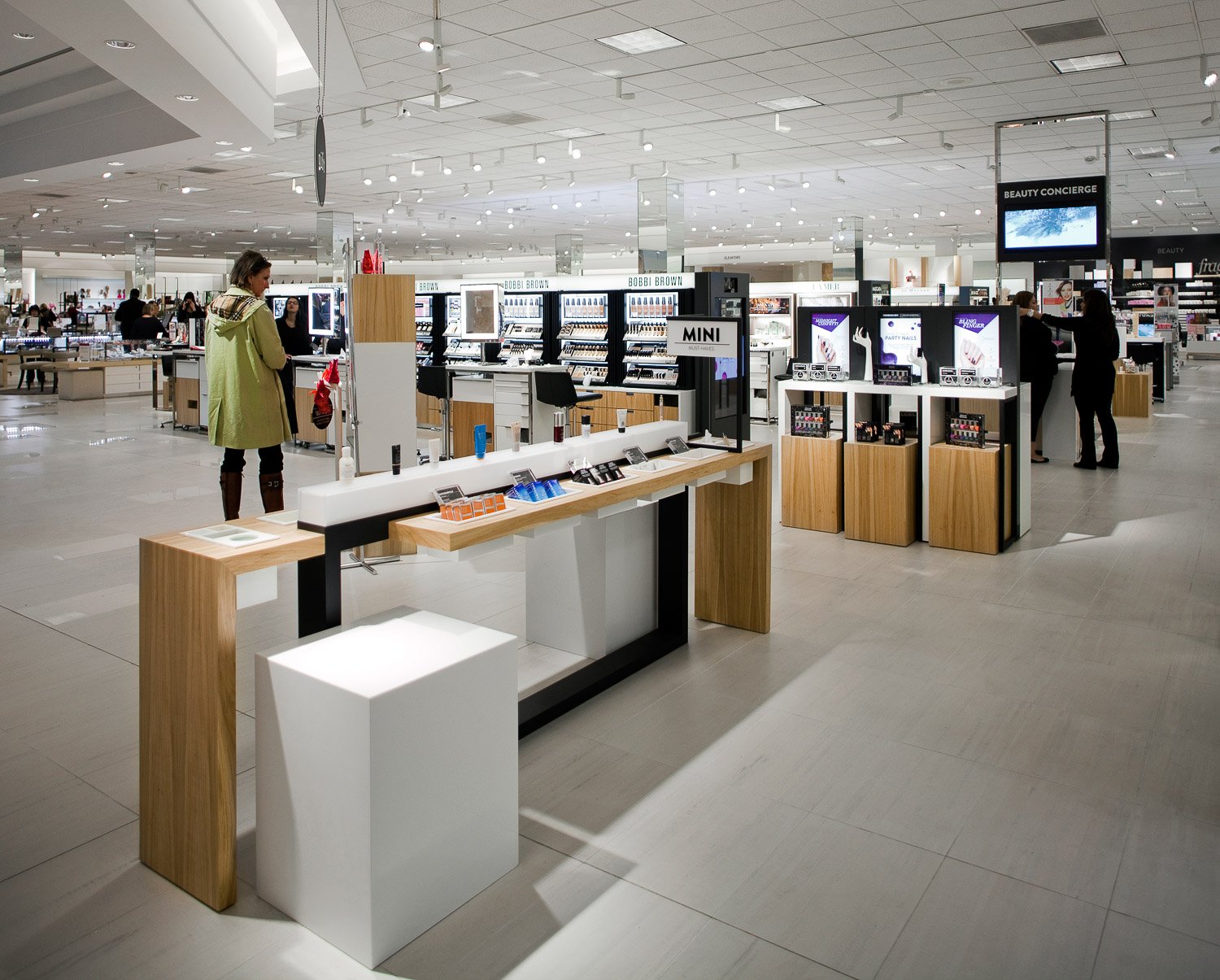
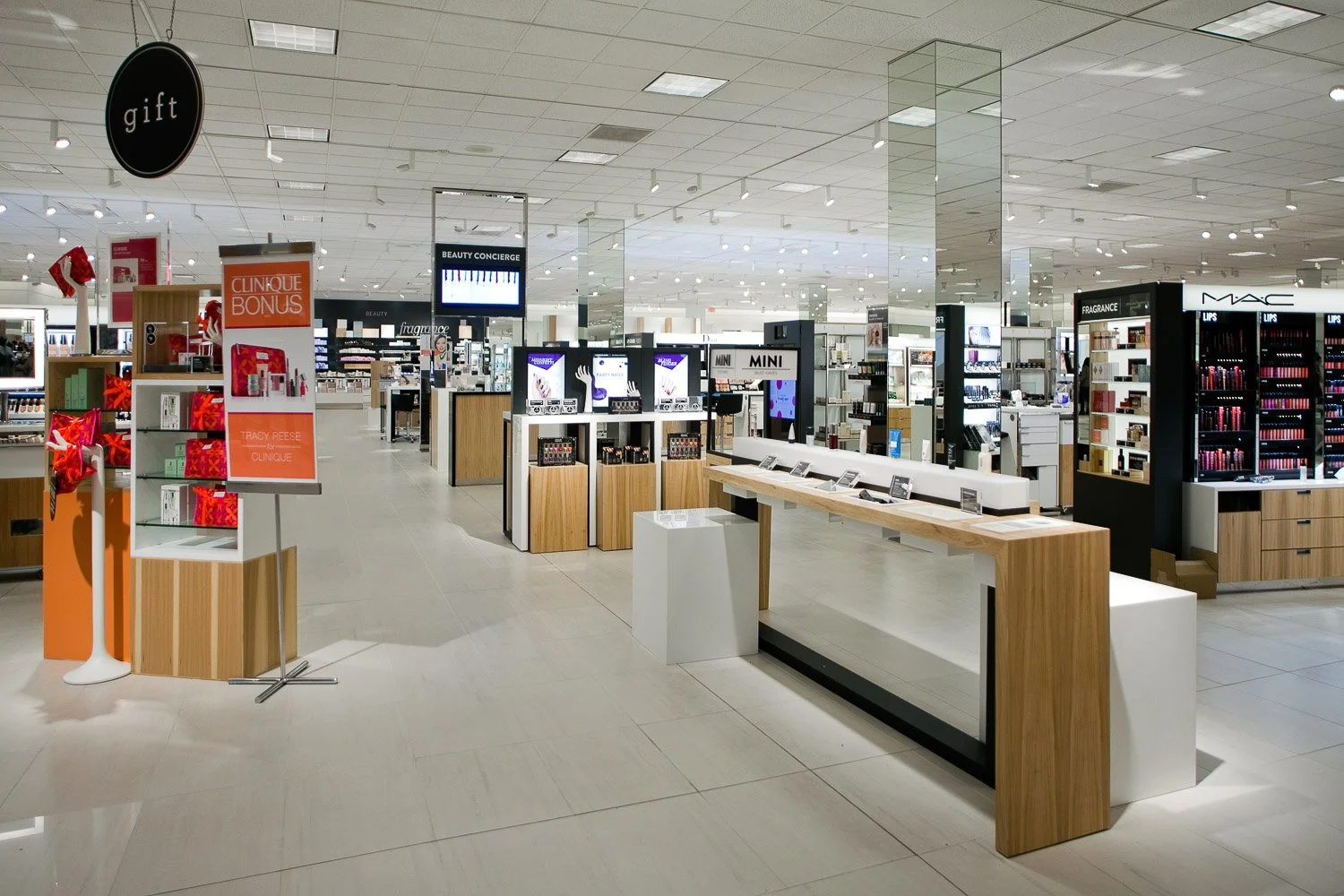
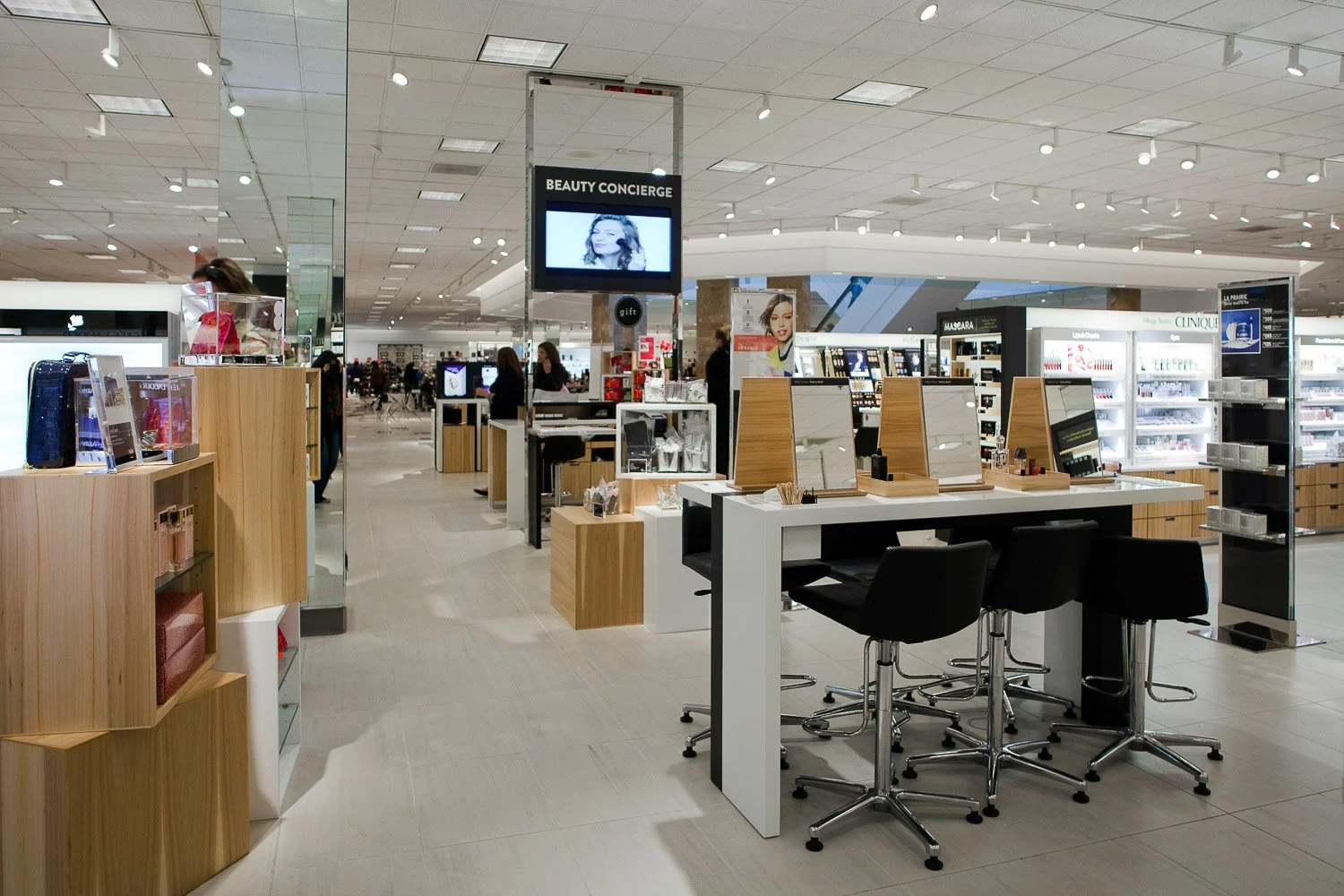
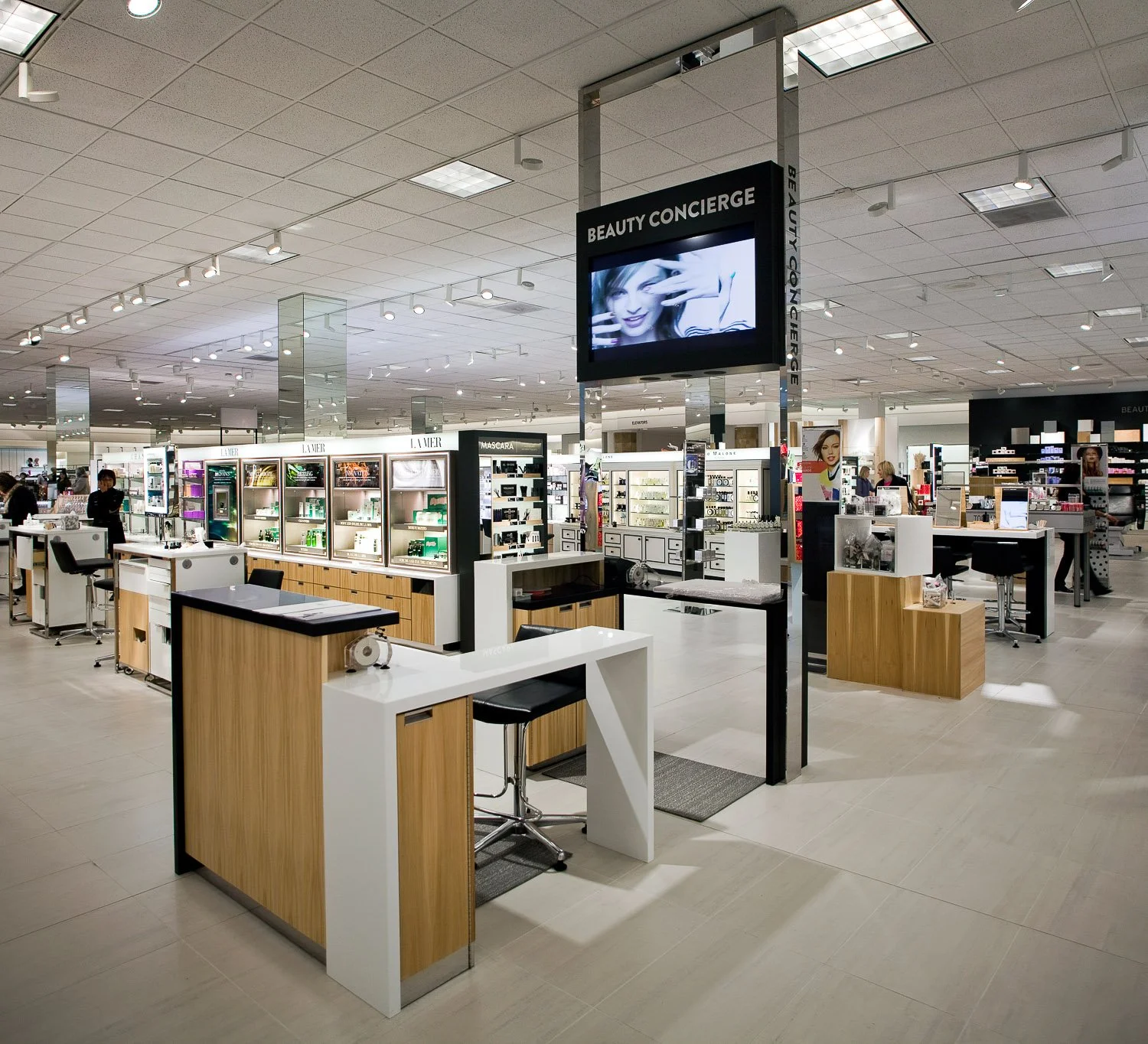
Nordstrom's beauty department had become an assemblage of vendor brands — indistinguishable from any other department store. But customers trusted Nordstrom's point of view in fashion and shoes. The insight: they'd pay for that same curation and opinion in beauty. The solution was to insert Nordstrom's voice at the physical center of the department — a curated, service-forward experience that replaced the brand cacophony with a clear editorial perspective.
Retail Experience · Service Design · System Design · National Rollout
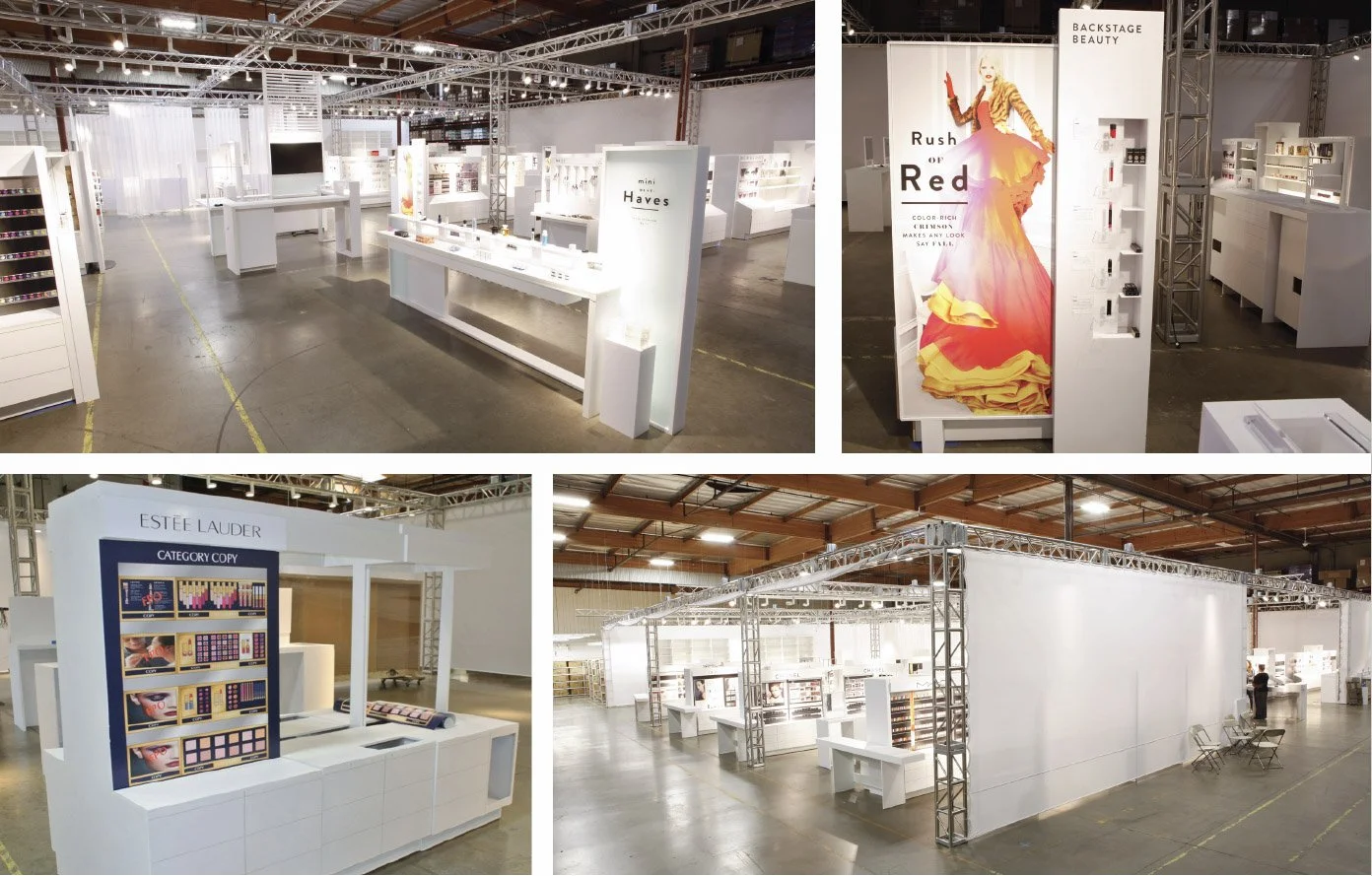
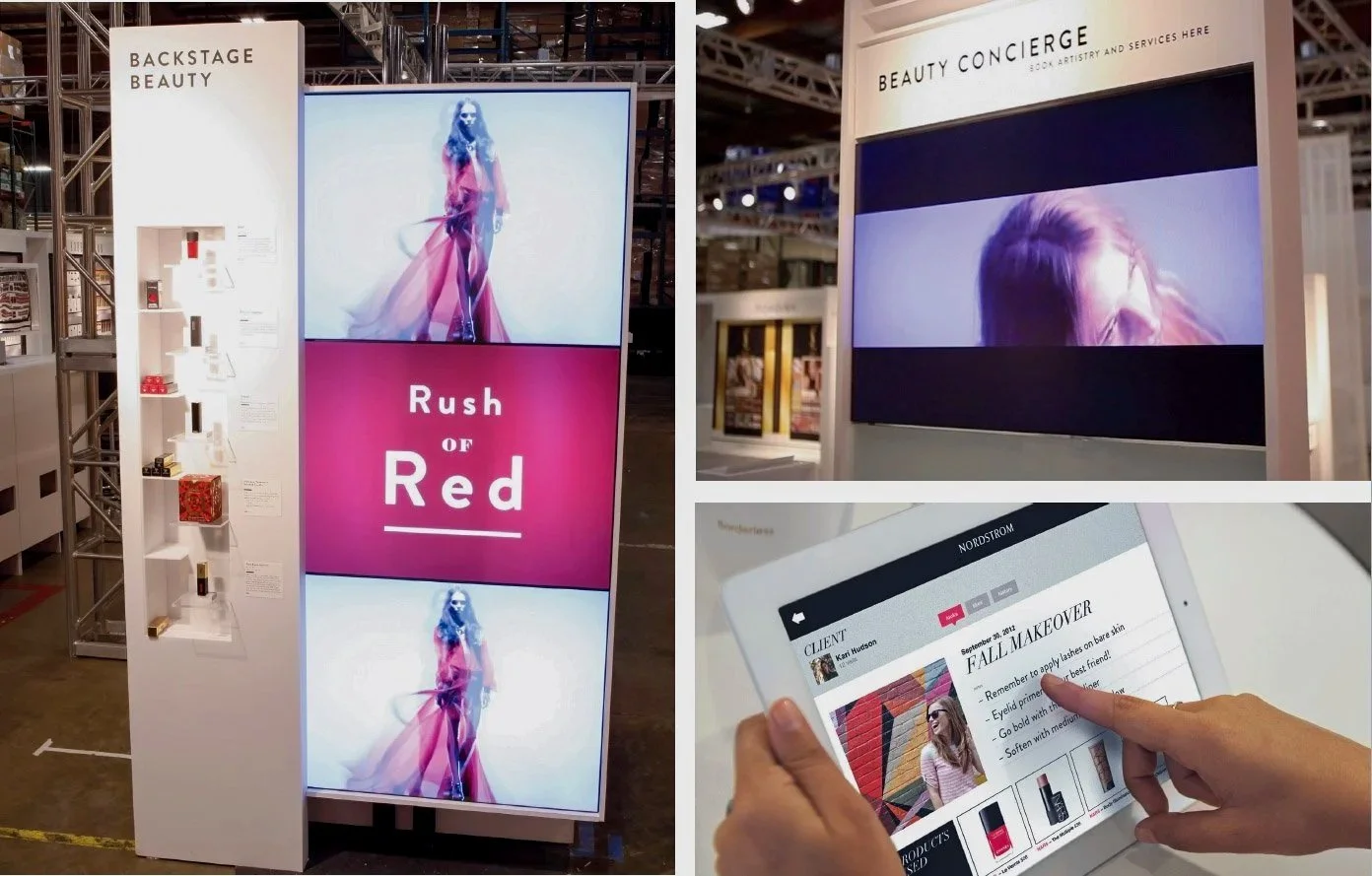
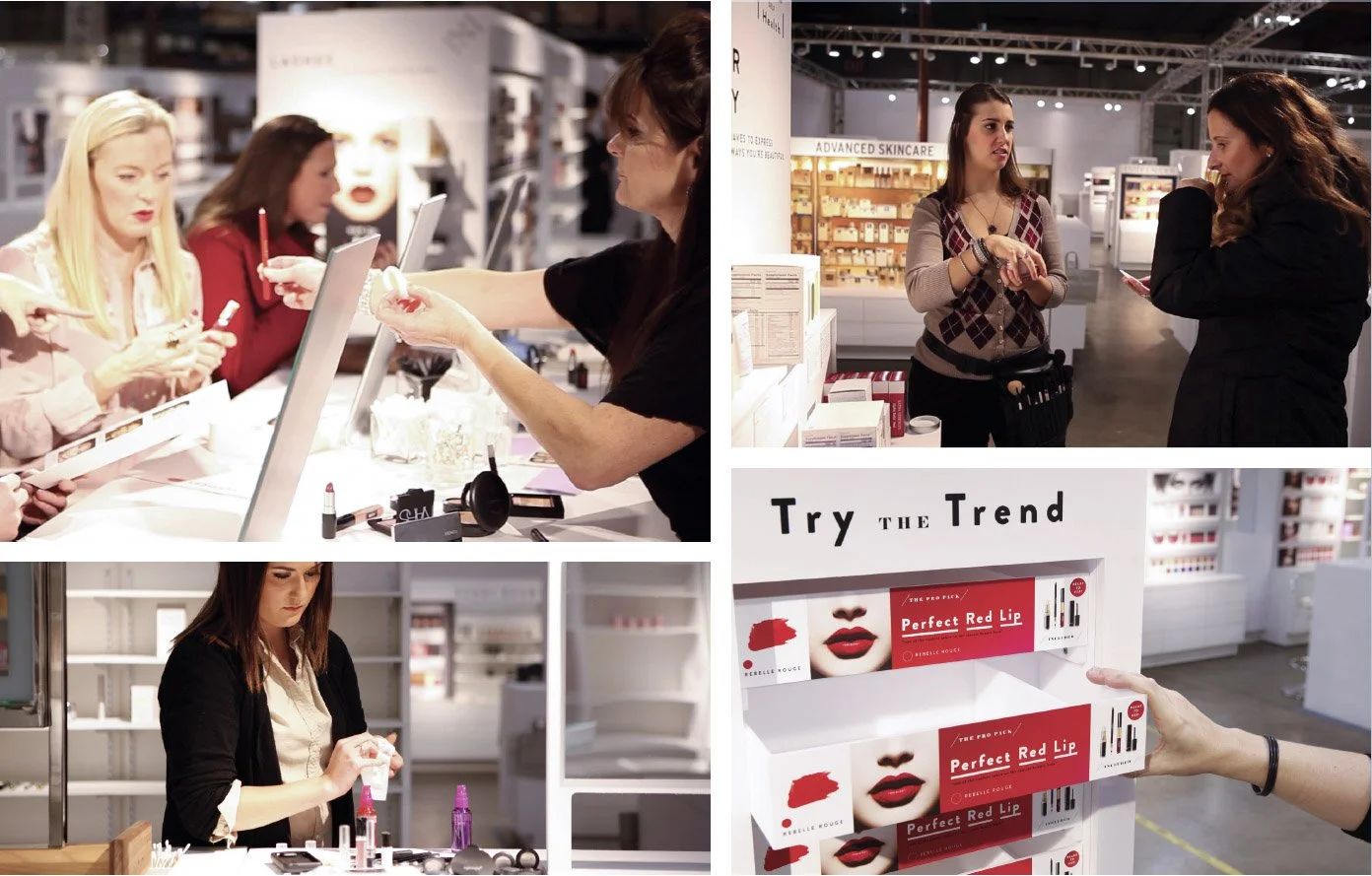
Nordstrom partnered with Hornall Anderson to understand how today's consumer defines an exceptional beauty experience, and then to build it. After an initial research and strategy phase, I led the development of a full-scale 8,000 sf prototype lab, a working simulation of the new department built for testing with staff and customers before a single store was touched.
The prototype did the heavy lifting. It validated the fixture system, the new service model and staffing roles, the digital endcaps and POP displays, and the "Nordstrom at the Core" spatial concept. From that testing, the design was refined, piloted in 8 stores, and ultimately rolled out to approximately 30 locations nationwide.
From foam-core to rollout — the prototype in motion
A time-lapse of the 8,000 sf prototype coming to life — from rough foam-core mockups through fixture installation, staff training, and live customer testing.
Pilot stores & rollout
Innovation Center · Immersive Environment · Digital Content
GE's first Customer Innovation Center in North America was purpose-built for Calgary — the heart of Canada's energy industry — at a moment when GE wanted to deepen its relationship with the oil and gas sector. The brief was ambitious: a space where enterprise customers could experience GE's full breadth of innovation across energy, healthcare, transportation, and infrastructure, and understand why GE wasn't just a vendor but a partner in the challenges that matter.
The design organized the experience into three distinct zones: an immersive entry sequence with an overscaled slatted GE logo and large-format custom video content; a curved innovation gallery featuring an interactive timeline of GE's 130-year legacy, a 30-foot curved video wall with custom ecosystem stories, and the Edison quote corridor; and a suite of flexible working and collaboration spaces — from intimate client lounge to boardroom — finished with a quiet library and respite area.
On working with AI
Like everyone in this field, I’m figuring out what these tools make possible — and where they fall short.
The work below isn’t polished portfolio. It’s active experimentation: spatial design proposals visualized with AI rendering tools, architectural concept exploration in Midjourney, and AI-assisted storytelling for a conference presentation on design leadership. Some of it worked well. Some didn’t. All of it was useful to understand.
The question driving all of it: not what can AI do, but what can I do with it that I couldn’t do before?
Rendair.ai / AI Rendering Exploration
One of my last projects at Philips: developing proposals to restore healthcare infrastructure in Ukraine included a concept for pre-fabricated Imaging Diagnostic Centers built in a new factory in Ukraine (not shown) as well as a MRI Training Center to address radiology-tech staff shortages and support an EU-funded 25-MRI delivery proposal.
I modeled the facility in SketchUp and used it to compare AI-assisted rendering against my existing Enscape pipeline. Rendair.ai and Nano Banana take a 3D model as input and generate photorealistic renders, including people and environmental context.
Facility overview — isometric view
CAD model → AI render
Training Center Entry — SketchUp
Training Center Entry — Rendair.ai
MRI Control Room — SketchUp
MRI Control Room — Rendair.ai
Project overview board — design iterations and AI rendering tests
Midjourney / Concept Visualization
In fall 2025 I enrolled in a weekend workshop on Midjourney for architectural visualization and brought two team members along so we could understand together how AI might change spatial design practice.
We explored architectural sketch styles via text prompt and tested Midjourney's sophistication for clinical environments like MRI suites. Honest conclusion: interesting for style exploration and early concepting, limited without model training on Philips design language, which wasn't sanctioned by IT at the time.
More valuable as a team learning exercise than a production tool. Understanding the landscape so I could advise my team and leadership accurately was the real deliverable.
Architectural sketch style exploration via text prompt
MRI suite — text-to-image
MRI — prompt iterations
Healthcare — isometric diagram
Runway Gen-2 / AI Video & Canva / Storytelling
When my team moved from Philips’ global Innovation & Design function into the North American Enterprise Sales org, I agreed to give a talk at the Design Management Institute conference on what happens when you move designers into a sales organization.
To protect the privacy of the colleagues I’d interviewed, I built ten animated character avatars in Runway Gen-2 — short vignette videos representing key themes, structured as a Top 10 countdown. The entire deck was built in Canva using AI layout and design tools.
The talk went well enough to be invited back to a larger DMI conference five months later. The more interesting result: an AI-native workflow that let a solo designer turn qualitative interview data into a polished conference presentation in a compressed timeline.
The cast — 10 AI character avatars
Slide in use — character video in Canva deck
Runway asset library — character iterations
I have midwest roots. Grew up in Michigan, studied architecture as an undergrad. After a stint in practice I wanted to make things with my hands and moved to upstate New York, studied furniture design, and worked as a furniture maker. That's where I met my wife.
Graduate school at Cranbrook Academy of Art followed, an MFA in 3D Design, and then two years designing science museum exhibits before joining IDEO, where I stayed for eleven years. I built the Chicago studio's environments practice from nothing, expanded into healthcare innovation, and ran workshops with groups from twenty to two hundred and fifty.
NBBJ brought eighteen months embedded in a research project for the VA Replacement Medical Center in New Orleans, resulting in a published guide on veteran-centered design. Then Hornall Anderson in Seattle, where I led the experience design studio bringing physical and digital brand experiences to life for the NBA, Airbus, Nordstrom, Alaska Airlines, and GE. Then Philips Healthcare in Cambridge, where I led a strategic design consulting team that contributed to $1.1 billion in enterprise sales and earned international design awards.
The thread through all of it: space is a medium. It shapes how people feel, move, and make decisions. A room is never just a room. It's a message about what this organization believes and who it's for.